
Modern snow vehicles have revolutionized winter transportation and recreation, yet they face significant challenges that continue to test engineering ingenuity and human ambition. ❄️

The Evolution of Winter Mobility: Where We Stand Today
Snow vehicles have come a long way from the rudimentary sleds and early snowmobiles of the past century. Today’s fleet includes sophisticated snowmobiles, tracked all-terrain vehicles, snow coaches, and specialized arctic exploration machines. These vehicles represent the pinnacle of cold-weather engineering, combining power, traction, and thermal management in ways that seemed impossible just decades ago.
Despite remarkable advances, modern snow vehicles continue to encounter fundamental limitations that challenge manufacturers, operators, and adventurers alike. Understanding these boundaries is essential for anyone working in winter tourism, arctic research, search and rescue operations, or simply enthusiasts pushing the limits of winter exploration.
Power vs. Weight: The Eternal Engineering Dilemma
One of the most persistent challenges in snow vehicle design remains the power-to-weight ratio. Engineers constantly struggle to balance the need for sufficient engine power with the imperative to keep vehicles light enough to avoid sinking into soft snow or becoming impossibly unwieldy.
Heavy vehicles with powerful engines can plow through deep snow and climb steep inclines, but they also compact snow beneath them, create deeper tracks, and consume substantially more fuel. Lighter vehicles offer better flotation and maneuverability but often lack the torque needed to navigate challenging terrain or pull loaded sleds.
The Flotation Factor
Flotation—the ability of a vehicle to stay on top of snow rather than sinking—depends on weight distribution across the contact surface. Modern snowmobiles address this through wide tracks and skis, while larger vehicles employ multiple axles and extremely wide treads. However, there’s a limit to how much surface area can be added before the vehicle becomes impractical for transportation or storage.
Research stations in Antarctica face this challenge constantly. Their specialized vehicles must carry heavy loads across vast distances without breaking through snow bridges over crevasses, yet they need enough power to handle whiteout conditions and severe gradients.
Temperature Extremes: When Metal Meets Arctic Cold 🌡️
Extreme cold presents unique challenges that extend far beyond simply starting an engine. At temperatures below -40°C (which coincidentally is also -40°F), materials behave in unexpected ways that can compromise vehicle integrity and functionality.
Metals become brittle, plastics shatter like glass, rubber loses all flexibility, and lubricants thicken to near-solid consistency. Hydraulic fluid becomes sluggish, batteries lose capacity dramatically, and fuel can gel or freeze despite additives. Electronic components malfunction, displays become unreadable, and adhesives fail catastrophically.
Material Science at the Edge
Manufacturers have developed specialized materials and treatments to combat extreme cold, including:
- Arctic-grade steel alloys with enhanced cold-temperature ductility
- Synthetic lubricants designed to remain fluid at -60°C
- Special polymer compounds that maintain flexibility below standard operating ranges
- Advanced battery chemistry optimized for cold-weather performance
- Heated compartments for critical electronic and hydraulic components
Yet even with these innovations, there remains a practical lower limit. Most commercial snow vehicles are rated for operation only down to -40°C to -45°C, with specialized arctic vehicles extending this to perhaps -55°C. Beyond these temperatures, the risk of catastrophic failure becomes unacceptably high.
Terrain Challenges: Beyond Simple Snow
Snow is not a uniform substance. It varies dramatically in density, crystal structure, moisture content, and stability. A vehicle that performs excellently on packed powder may struggle hopelessly in wet, heavy snow or become dangerously unstable on wind-crusted surfaces.
The Crust Problem
Wind-hardened snow crusts present a particularly vexing challenge. These surfaces can support a vehicle’s weight momentarily before suddenly giving way, causing the machine to punch through unpredictably. This creates violent jolts that stress frames, break components, and exhaust operators. No current suspension system fully solves this problem—engineers can only mitigate it through sophisticated active suspension that responds in milliseconds.
Sastrugi and Surface Irregularities
Sastrugi—sharp irregular grooves and ridges carved by wind in snow surfaces—create bone-jarring obstacles that severely limit travel speed. In polar regions, sastrugi fields can extend for hundreds of kilometers, making rapid transit impossible despite flat topography. Vehicles must crawl across these features to avoid damage, with average speeds sometimes dropping below 5 kilometers per hour.
Antarctic expeditions often report that sastrugi, not distance or cold, represents their greatest impediment to progress. This limitation directly impacts research schedules, rescue capabilities, and expedition planning.
Range and Fuel Efficiency: The Logistical Constraint
Fuel consumption remains a critical limitation for all snow vehicles. The combination of high power requirements, cold-weather inefficiency, and challenging terrain creates voracious fuel appetites that severely limit operational range.
Modern snowmobiles typically consume between 15 and 30 liters per 100 kilometers under normal recreational conditions, but this can double or triple in deep snow, steep terrain, or extreme cold. Larger vehicles consume proportionally more, with some arctic tractors burning over 100 liters per hour under heavy load.
The Resupply Challenge
In remote winter environments, fuel availability becomes the ultimate range limiter. Expeditions must either carry enough fuel for the entire journey—adding substantial weight—or arrange complex resupply operations. In arctic research contexts, fuel often must be flown in at enormous expense, making extended operations prohibitively costly.
Electric alternatives remain largely impractical due to battery performance degradation in extreme cold and the absence of charging infrastructure. Hybrid systems show promise but add complexity and weight that offset some efficiency gains.
Visibility and Navigation: When the White World Disappears 🌨️
Whiteout conditions—when blowing snow, fog, or cloud cover eliminates visual contrast—create disorientation so complete that operators cannot distinguish ground from sky. Modern GPS systems solve the location problem but cannot prevent collisions with hidden obstacles or prevent vehicles from traveling over cliff edges or into crevasse fields.
Ground-penetrating radar, LIDAR, and forward-looking infrared systems have improved situational awareness, but they remain imperfect in severe conditions. Snow-covered obstacles often produce weak or ambiguous returns, and no current system reliably detects all hazards in real-time at operational speeds.
The Human Factor in Extreme Conditions
Even when vehicles function perfectly, human operators face significant limitations. Cold stress, reduced visibility, vibration fatigue, and the cognitive demands of navigating featureless terrain create safety concerns that no amount of technology fully addresses. Most safety protocols mandate complete cessation of travel during whiteout conditions, effectively imposing operational boundaries regardless of vehicle capability.
Environmental Impact: Treading Lightly on Fragile Ecosystems
Modern awareness of environmental fragility has imposed new limitations on snow vehicle use. Arctic and alpine ecosystems are remarkably sensitive to disturbance, and vehicle traffic creates impacts that persist for decades or longer.
Compressed snow beneath vehicle tracks alters the thermal properties of the snow pack, affecting everything from plant survival to permafrost stability. Exhaust emissions deposit pollutants that accumulate in pristine environments. Noise disturbs wildlife during critical winter survival periods.
Regulatory Boundaries
Many regions now impose strict limitations on where and when snow vehicles can operate. National parks, wilderness areas, and wildlife protection zones increasingly restrict or prohibit motorized winter access. These regulatory boundaries, while essential for conservation, limit the practical utility of snow vehicles for research, recreation, and commercial operations.
Manufacturers respond by developing quieter engines, cleaner emissions systems, and lower ground-pressure designs, but fundamental tensions remain between vehicle utility and environmental protection. ♻️
Maintenance and Reliability in Hostile Environments
Snow vehicles operating in remote or extreme conditions must maintain near-perfect reliability because breakdowns can become life-threatening emergencies. Yet the same harsh conditions that make vehicles essential also make them prone to failure.
Preventive maintenance becomes exponentially more difficult in field conditions. Simple tasks like oil changes require heated enclosures or specialized equipment. Parts inventory becomes a critical logistical concern—vehicles may need specific components that must be flown in at great expense and delay.
The Complexity Trade-off
Modern snow vehicles incorporate sophisticated electronics, computer controls, and advanced materials that improve performance but reduce field repairability. A snowmobile from the 1970s could often be fixed with basic tools and mechanical knowledge. Today’s machines may require diagnostic computers, specialized software, and proprietary components available only through authorized dealers.
This creates a fundamental tension: the technologies that push performance boundaries also reduce independence and increase vulnerability to cascading failures in remote locations.
The Speed Limitation: Why Faster Isn’t Always Possible
Despite powerful engines and advanced suspensions, snow vehicles face practical speed limits well below what their power plants could theoretically achieve on pavement. Most recreational snowmobiles are electronically limited to around 130-160 km/h, while practical operating speeds in varied terrain rarely exceed 50-80 km/h.
The limiting factors include suspension travel constraints, the unpredictability of snow surfaces, the danger of hidden obstacles, and the catastrophic consequences of loss of control. At higher speeds, even small irregularities become violent impacts, and reaction times become insufficient for avoiding hazards.
Future Horizons: Pushing Beyond Current Boundaries 🚀
Despite these limitations, innovation continues. Several promising developments may expand snow vehicle capabilities in coming years:
- Advanced composite materials offering better strength-to-weight ratios at extreme temperatures
- Artificial intelligence systems for real-time terrain analysis and autonomous navigation
- Hybrid power systems combining internal combustion with electric drive for improved efficiency
- Active suspension systems with greater travel and faster response times
- Improved sensing technologies including millimeter-wave radar and synthetic aperture systems
- Modular designs allowing rapid field reconfiguration for different conditions
Some experimental vehicles already incorporate these technologies, though most remain too expensive or unproven for widespread adoption. The fundamental physical constraints—temperature, terrain, and the properties of snow itself—will likely remain, but the margins of operation may gradually expand.
The Human Element: Beyond Mechanical Limits
Ultimately, snow vehicle limitations often reflect human constraints rather than purely mechanical ones. Operator skill, judgment, physical endurance, and risk tolerance determine what’s actually achievable in the field. The most capable vehicle becomes useless without trained operators who understand its capabilities and limitations.
Training programs, safety protocols, and experience-sharing between operators represent crucial elements in pushing boundaries responsibly. The snow vehicle community continues to develop best practices that allow ambitious operations while maintaining acceptable safety margins.
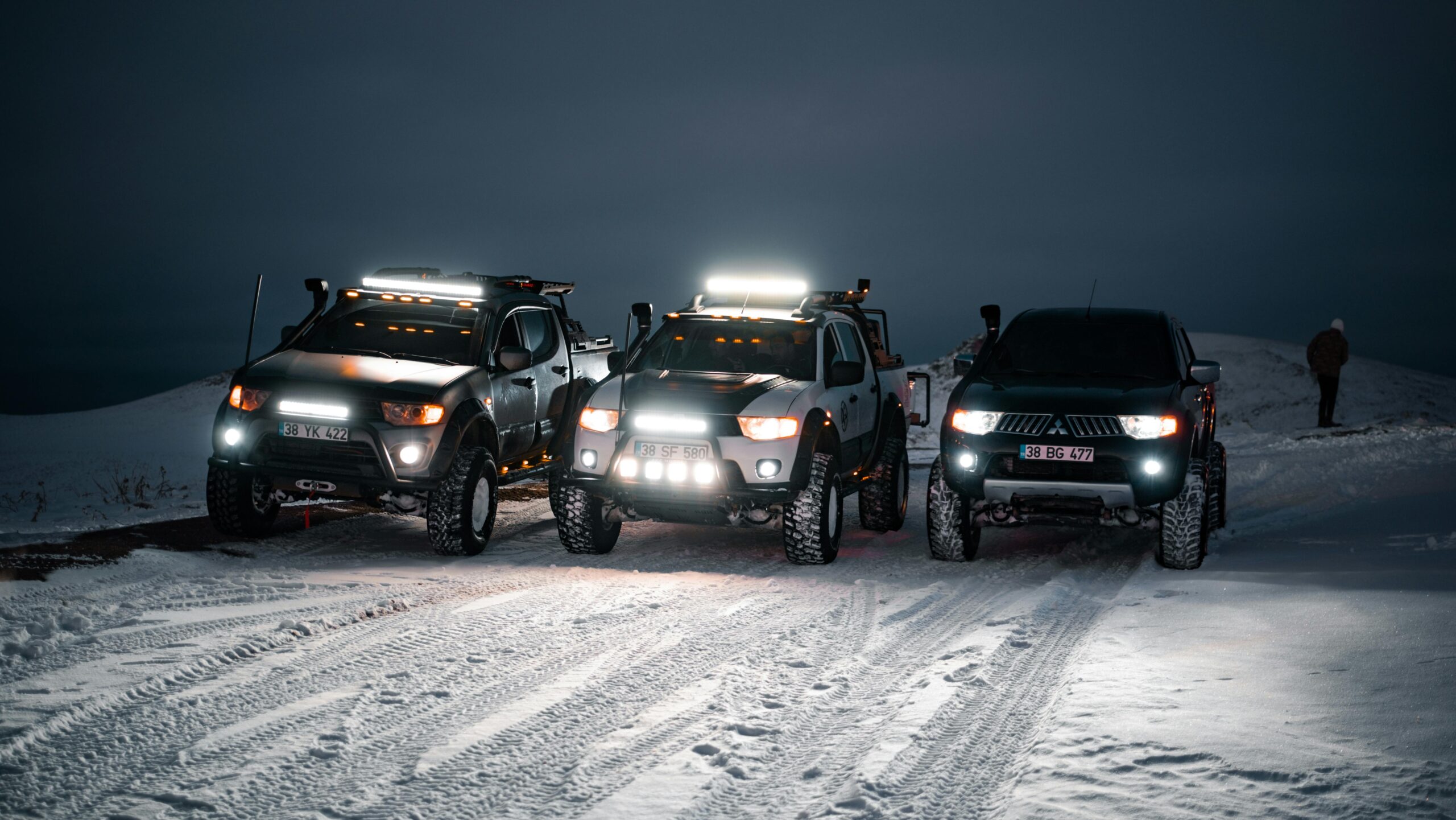
Breaking Through: Where Determination Meets Engineering
Modern snow vehicles represent remarkable achievements in engineering, yet they operate within defined boundaries imposed by physics, materials science, and practical constraints. Understanding these limitations isn’t pessimistic—it’s essential for realistic planning, safe operations, and informed innovation.
The most successful polar expeditions, search and rescue operations, and winter recreation programs share a common characteristic: deep respect for what snow vehicles can and cannot do. They plan around limitations, carry appropriate safety margins, and prepare for contingencies when vehicles reach their boundaries.
As technology advances, some boundaries will shift outward. Vehicles will go farther, operate in colder temperatures, navigate more challenging terrain, and do so more efficiently and cleanly. But the fundamental challenges of operating mechanical systems in extreme winter environments will persist, continuing to demand ingenuity, preparation, and respect for the formidable power of winter itself.
The boundaries we face today inspire the innovations of tomorrow, ensuring that the evolution of snow vehicles remains one of the most dynamic fields in transportation engineering. Each limitation overcome opens new possibilities for exploration, research, and adventure in Earth’s most challenging winter environments. 🏔️