
Winter terrain demands respect, skill, and a deep understanding of how snow and ice behave under your feet, skis, or board.

Whether you’re an aspiring backcountry enthusiast, a competitive winter athlete, or simply someone who wants to navigate icy sidewalks with confidence, mastering the physics of frozen precipitation transforms how you move through cold-weather environments. The interaction between your body, equipment, and crystalline surfaces involves fascinating principles of friction, pressure, temperature dynamics, and material science that directly impact your safety and performance.
This comprehensive guide explores the scientific foundations of winter movement, offering practical insights that will revolutionize your approach to snowy and icy conditions. By understanding what’s happening at the molecular level beneath your feet, you’ll make smarter decisions about technique, equipment selection, and risk management in winter environments.
🔬 The Molecular Magic Beneath Your Feet
Snow and ice aren’t simply frozen water—they’re complex crystalline structures with unique physical properties that change dramatically based on temperature, pressure, and environmental conditions. When you step onto snow, you’re not just compressing white fluff; you’re engaging with hexagonal ice crystals arranged in intricate patterns that determine traction, stability, and movement efficiency.
The friction between your equipment and frozen surfaces involves a thin layer of liquid water created by pressure and friction heat. This quasi-liquid layer, typically just nanometers thick, acts as a lubricant that enables sliding. The warmer the ice (closer to 0°C or 32°F), the thicker this layer becomes, creating faster but sometimes less controllable conditions. Conversely, extremely cold ice produces minimal lubrication, increasing friction and making movement more challenging but potentially more predictable.
Crystal Structure and Snow Quality
Fresh powder snow consists of intricate stellar dendrites—the classic six-pointed snowflakes—that interlock to create air pockets comprising up to 90% of the snow volume. This structure provides exceptional cushioning but limited support until compressed. As snow ages, these delicate crystals break down through sublimation, wind action, and temperature cycles, transforming into rounded grains that pack more efficiently.
Understanding snow metamorphism helps you predict surface behavior. Temperature gradient metamorphism creates depth hoar—large, faceted crystals with poor cohesion that create unstable layers prone to avalanches. Melt-freeze cycles produce corn snow in spring conditions, offering excellent grip and predictable performance during specific temperature windows.
⚙️ Pressure Distribution and Edge Control
The relationship between pressure and performance governs every winter movement skill. When you concentrate your body weight over a smaller surface area—whether through ski edges, crampon points, or the ball of your foot—you increase pressure per square inch, enabling penetration through surface layers to more stable snow beneath.
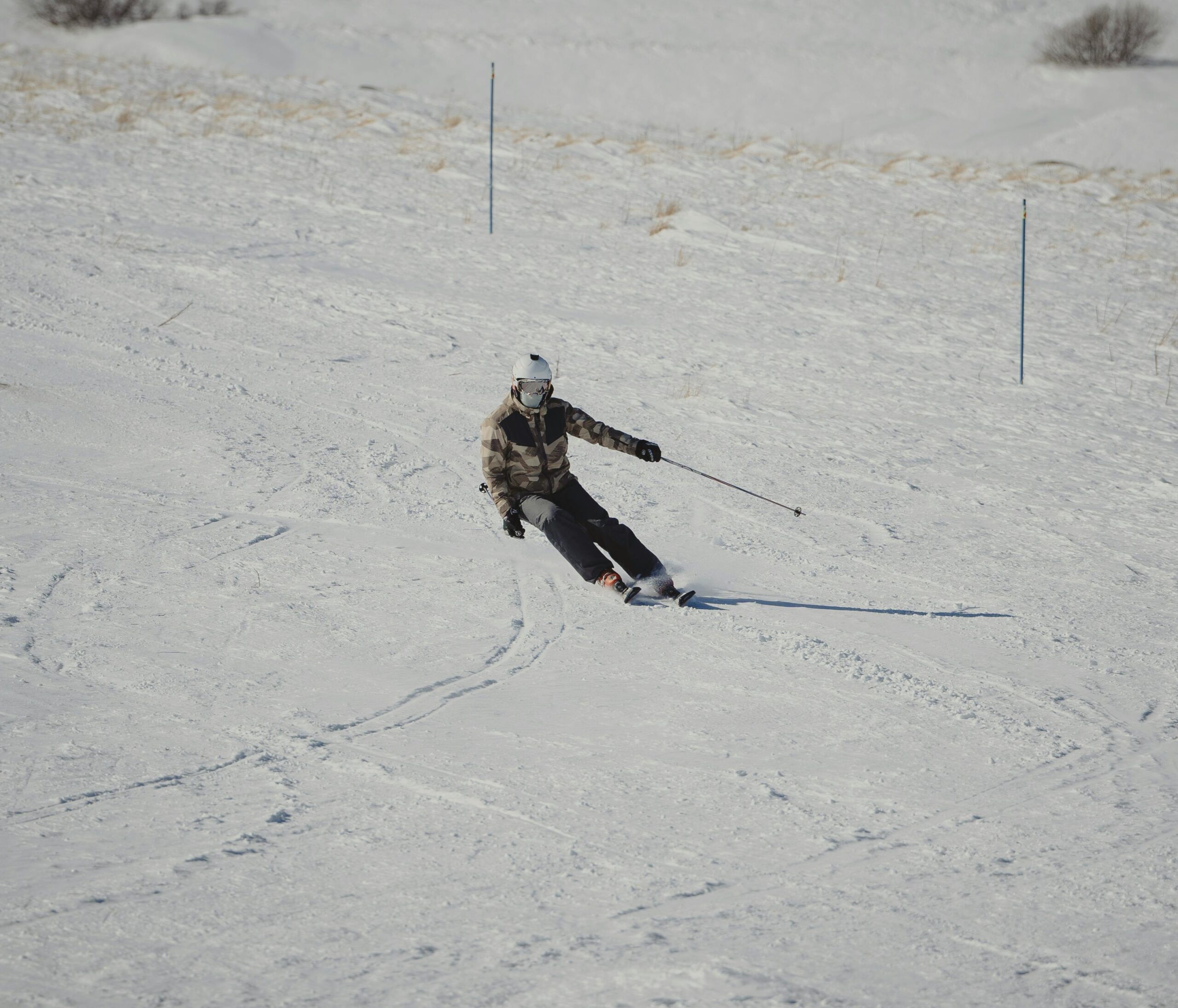
Elite skiers and snowboarders instinctively manipulate pressure distribution throughout turns. During edge engagement, they apply force perpendicular to the slope, creating a platform that resists sideways slippage while allowing controlled forward momentum. The physics involves balancing centripetal force (pulling you down the fall line) against the edge’s resistance and the snow’s shear strength.
The Edge Angle Equation
Effective edging requires angles between 45 and 70 degrees relative to the snow surface, depending on conditions. Steeper angles provide maximum hold on firm snow but can break through softer surfaces. Shallow angles distribute force over larger areas, ideal for powder or breakable crust.
Modern ski and snowboard design incorporates sidecut radius—the hourglass shape that determines turn radius. Combined with proper angulation and pressure application, this geometry creates carved turns where edges cut clean arcs rather than skidding. The resulting tracks reveal your technical proficiency: clean, narrow trenches indicate skilled carving, while wide, scattered snow suggests excessive skidding and energy waste.
🎿 Friction Management for Speed and Control
Controlling friction represents perhaps the most critical skill in winter movement. Too much friction wastes energy and limits speed; too little creates dangerous loss of control. The friction coefficient between ski bases and snow varies from 0.02 (very slippery) to 0.20 (highly resistant) depending on multiple factors.
Base material matters significantly. Sintered polyethylene bases absorb wax more effectively than extruded alternatives, maintaining lubrication across varying conditions. Stone grinding creates microscopic structure patterns that channel meltwater away from the contact patch while maintaining adequate surface contact.
Waxing Science and Temperature Matching
Ski and snowboard wax isn’t merely lubrication—it’s a sophisticated system for managing the interface between base material and snow crystals. Different wax formulations contain hydrocarbon chains of varying lengths optimized for specific temperature ranges. Cold-weather waxes use harder compounds that resist abrasion from sharp, aggressive crystals. Warm-weather formulations remain pliable to prevent suction as meltwater increases.
Fluorocarbon additives, though increasingly regulated for environmental reasons, traditionally enhanced water repellency in wet conditions. Modern alternatives using graphite and other compounds achieve similar results through different mechanisms, demonstrating ongoing innovation in materials science.
❄️ Reading Snow Conditions Like a Pro
Developing the ability to assess snow quality before committing to movement represents advanced winter terrain literacy. Visual cues, tactile feedback, and even sound provide essential information about what lies beneath the surface.
Wind-affected snow displays characteristic sastrugi patterns—wavelike ridges indicating prevailing wind direction and intensity. These features create variable density layers that affect stability and performance. Leeward slopes accumulate wind-deposited snow prone to slab formation, while windward aspects may feature scoured, firm surfaces.
The Stomp Test and Snow Pit Analysis
Before descending unfamiliar terrain, perform simple stability assessments. The stomp test involves jumping forcefully on a small snow slope to detect hollow sounds or cracking—indicators of unstable layers. More thorough evaluation requires digging snow pits to examine stratigraphy, identifying weak layers through compression tests and crystal analysis.
Temperature profiling within the snowpack reveals concerning patterns. Large temperature gradients (greater than 1°C per 10cm) drive faceting processes that weaken layer bonds. Identifying these conditions allows informed decisions about route selection and risk acceptance.
🏔️ Terrain Navigation and Fall Line Dynamics
Understanding how gravity, slope angle, and snow conditions interact enables strategic movement through winter landscapes. The fall line—the path a ball would take rolling downhill—represents the direction of maximum gravitational pull. Skilled winter travelers manipulate their relationship to this line, crossing perpendicular for control or aligning parallel for speed.
Slope angle dramatically affects both movement options and avalanche risk. Angles between 30 and 45 degrees present optimal avalanche terrain while also offering the most exciting skiing and riding. Steeper pitches require advanced technique; gentler slopes may demand alternative propulsion methods like skating or poling.
Anticipating Terrain Transitions
Changes in slope angle, aspect, or elevation create distinct snow zones requiring technique adaptation. Transitions from open bowls to tree-covered slopes alter snow preservation and stability. North-facing aspects in the Northern Hemisphere maintain colder, drier snow longer, while south-facing slopes experience more melt-freeze cycles.
Convexities (rollovers) concentrate tension in the snowpack, increasing instability and requiring cautious approach. Concavities (gullies) accumulate deeper snow but may harbor persistent weak layers. Reading these topographic features develops through experience but accelerates when you understand the underlying physics.
🥾 Footwear and Equipment Optimization
Your equipment forms the mechanical interface between your body and frozen surfaces. Selecting appropriate gear based on conditions and objectives directly impacts performance and safety. Boot sole rubber compounds vary in temperature performance; some materials harden dangerously in extreme cold while others maintain flexibility.
Crampon design reflects different philosophical approaches to ice traction. Vertical front points enable technical ice climbing by concentrating force on minimal contact areas. Horizontal points distribute weight more evenly, suited for glacier travel and moderate snow slopes. Hybrid designs attempt to balance these competing demands.
The Binding-Boot-Ski System
Modern alpine systems represent sophisticated integration of multiple components. Ski flex patterns, torsional rigidity, and rocker profiles must complement your technique and conditions. Bindings translate body movements into ski response while providing critical safety release functions calibrated to your weight, ability, and risk tolerance.
Boot fit remains paramount—even millimeters of heel lift or lateral play compromises control and accelerates fatigue. The boot cuff angle affects shin pressure and forward lean, altering how effectively you can drive ski edges and absorb terrain variations. Professional boot fitting addresses these nuances through custom modifications unavailable in off-the-shelf products.
🧊 Ice-Specific Movement Strategies
Pure ice demands different approaches than snow-covered surfaces. Glare ice—perfectly smooth and transparent—offers minimal mechanical purchase. Black ice appears deceptively wet but provides virtually no traction with standard footwear. White ice contains air bubbles that create some surface texture and marginally better grip.
When walking on ice without specialized equipment, adopt a shuffling gait with your center of mass over your feet. Penguin-style small steps maintain balance better than normal stride lengths. Avoid tilting your torso forward, which increases fall risk if your feet slip backward.
Advanced Ice Climbing Techniques
Ascending vertical ice requires understanding how tool placement affects ice integrity. Each swing of an ice axe creates stress fractures radiating from the placement. Skilled climbers position subsequent placements to avoid these compromised zones while maintaining three points of contact during movement.
Crampon technique on steep ice involves precise foot positioning and ankle flexibility. Front-pointing concentrates body weight over toe points, requiring strong calf muscles and excellent balance. Flat-footing distributes force across more points, reducing pump but requiring greater ankle range of motion.
🌡️ Temperature’s Critical Role
Temperature affects every aspect of snow and ice physics. At molecular scales, warmer temperatures increase crystal vibration, weakening bonds and accelerating metamorphism. At practical scales, temperature determines whether snow acts as a supportive platform or a energy-sapping morass.
The famous “zero degrees Celsius” threshold represents a critical phase transition, but snow behavior changes continuously across the temperature spectrum. At -20°C, snow crystals behave like angular grains of sand, providing excellent grip but slow gliding. At -2°C, incipient melting creates sticky conditions that ball up under skis and boots.
Optimizing Performance Windows
Spring corn snow illustrates perfect temperature timing. Overnight freezing creates a supportive crust that softens predictably as morning sun exposure increases surface temperature. The ideal skiing window occurs when the top few centimeters soften while deeper layers remain firm—typically 1-3 hours after direct sun exposure begins on a given aspect.
Understanding these cycles allows strategic planning. Start on east-facing slopes in early morning, transition to south aspects mid-morning, then finish on west faces in afternoon. This approach provides optimal snow conditions throughout the day while managing avalanche risk, as slopes are skied before dangerous warming occurs.
💪 Building Winter-Specific Athleticism
Moving efficiently on winter terrain requires specific physical adaptations. Balance, proprioception, and reactive strength matter more than pure cardiovascular fitness or maximum strength. The unstable, variable nature of snow surfaces demands constant micro-adjustments that develop through exposure and focused training.
Ankle and foot strength forms the foundation of winter movement skills. The small intrinsic muscles of the foot provide proprioceptive feedback and fine motor control essential for edge awareness and pressure modulation. Exercises like single-leg balance on unstable surfaces, toe raises, and barefoot strengthening directly transfer to winter performance.
Plyometric Power and Eccentric Control
Winter sports involve repeated explosive movements—initiating turns, absorbing bumps, recovering from off-balance positions. Plyometric training develops the fast-twitch muscle fibers and neural patterns required for these actions. Box jumps, depth drops, and lateral bounds build reactive capacity.
Equally important is eccentric strength—the ability to control lengthening muscle contractions. This capacity determines how effectively you can absorb impacts, resist unwanted acceleration, and maintain positions under load. Slow-tempo squats, Nordic hamstring curls, and downhill running develop this crucial component.
🎯 Progressive Skill Development Pathways
Mastering winter terrain movement follows predictable developmental sequences, though individual progression rates vary widely. Beginning with fundamental skills on forgiving terrain and gradually increasing complexity, steepness, and speed builds robust capabilities and appropriate risk assessment.
Initial focus should emphasize balance and pressure control on gentle slopes with consistent snow. Develop the ability to maintain centered stance, initiate direction changes smoothly, and stop reliably. These unglamorous fundamentals provide the platform for all advanced skills.
Intermediate Challenge Progression
As basic competency solidifies, progressively introduce variables: steeper pitches, variable snow conditions, tighter turn radii, higher speeds. Each new challenge should stretch current abilities without overwhelming them. This “optimal challenge zone” maximizes learning while maintaining safety margins.
Deliberately seek out different snow types—heavy wet snow, windblown powder, breakable crust, ice. Each condition teaches unique lessons about pressure management, edge engagement, and speed control. Versatility across conditions defines true mastery more than excellence in a single snow type.
🚀 Elevating Your Winter Movement Mastery
The journey from tentative beginner to confident winter terrain traveler involves continuous learning, deliberate practice, and humble respect for nature’s power. Physics provides the framework for understanding why techniques work, but developing intuitive feel requires miles of experience across varied conditions.
Video analysis accelerates learning by revealing the gap between intended and actual movements. Modern smartphone capabilities make this accessible to everyone. Recording your movement patterns and comparing them to skilled practitioners highlights specific areas for improvement that might otherwise remain invisible.
Seek mentorship from experienced winter travelers who can provide real-time feedback and help you develop appropriate risk assessment skills. The social learning environment of group activities often accelerates skill development while providing crucial safety backup in consequential terrain.
Remember that winter environments demand respect regardless of your skill level. Conditions change rapidly, consequences escalate quickly, and rescue resources may be distant. Developing excellent technical skills must parallel developing excellent judgment about when to apply those skills versus when to choose more conservative options.
The intersection of human movement and frozen landscapes offers endless opportunities for exploration, challenge, and growth. By understanding the physical principles governing snow and ice behavior, you transform from a tentative visitor to a confident traveler in winter’s spectacular domain. Each season brings new lessons, each storm creates fresh conditions to decode, and each descent offers another opportunity to refine your craft.