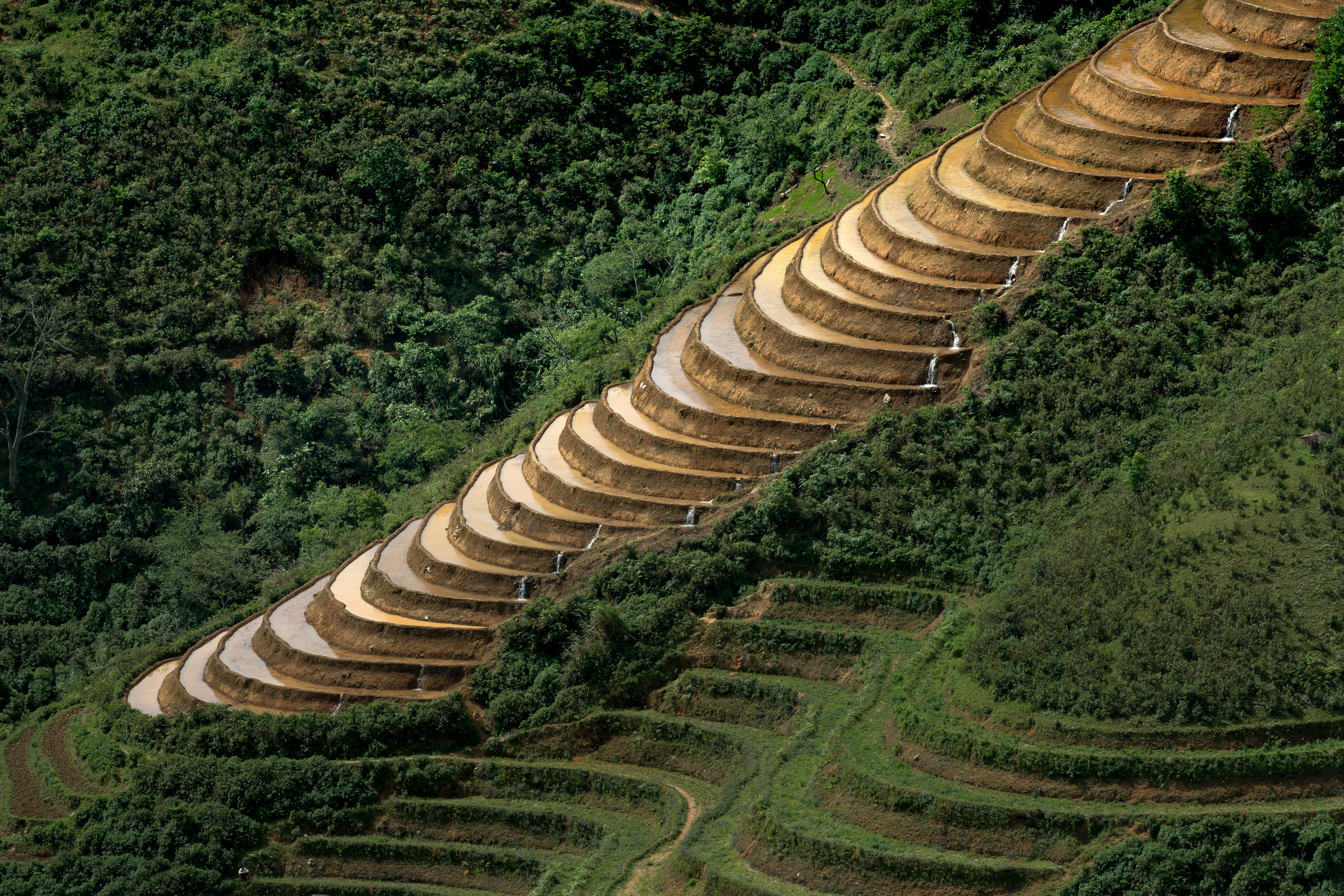
Building in mountainous regions presents unique challenges that demand careful planning, especially when seismic activity threatens structural integrity and human safety.

🏔️ Understanding the Seismic Reality of Mountain Regions
Mountain environments are inherently dynamic landscapes where geological forces constantly reshape the terrain. These regions often coincide with tectonic plate boundaries, making them particularly susceptible to seismic events. The combination of steep slopes, varying soil compositions, and geological instability creates a complex construction environment that requires specialized knowledge and meticulous planning.
Seismic considerations in mountain construction extend far beyond standard building codes. Engineers and architects must account for ground acceleration, soil liquefaction potential, landslide risks, and the amplification effects that mountainous topography can have on seismic waves. The elevation changes and variable bedrock depths add additional layers of complexity to foundation design and structural planning.
Historical data from earthquake-prone mountain regions worldwide demonstrates that structures built without proper seismic considerations face significantly higher risks of catastrophic failure. From the Himalayas to the Andes, from the Alps to the Rocky Mountains, construction projects must address these fundamental geological realities to ensure long-term safety and structural viability.
Foundation Design: The Critical Starting Point
The foundation serves as the critical interface between a structure and the ground beneath it. In mountain construction, this relationship becomes even more crucial due to the heterogeneous nature of mountain geology. Rock outcrops, fractured bedrock, colluvial deposits, and varying soil densities all influence foundation performance during seismic events.
Deep foundation systems often prove necessary in mountain environments where surface soils lack adequate bearing capacity or stability. Driven piles, drilled shafts, and caissons can anchor structures to competent bedrock layers, providing stability during ground shaking. The depth and configuration of these deep foundations must account for potential differential settlement and the varying seismic response characteristics of different soil and rock layers.
Site Investigation: Unveiling Hidden Geological Truths
Comprehensive geotechnical investigation forms the backbone of successful mountain construction projects. Subsurface exploration through drilling, test pits, and geophysical surveys reveals the geological profile that will dictate foundation design. These investigations identify weak zones, fault lines, groundwater conditions, and rock quality—all critical factors in seismic design.
Standard penetration tests, cone penetration tests, and seismic refraction surveys provide quantitative data about soil strength, density, and stiffness. Rock coring and laboratory testing establish the properties of bedrock formations. This comprehensive data collection enables engineers to model how the site will respond during earthquake loading and design foundations accordingly.
⚡ Structural Systems Engineered for Seismic Resilience
The structural framing system selected for mountain construction directly impacts how a building responds to seismic forces. Ductile structural systems that can deform without collapse provide the best performance during major earthquakes. Steel moment frames, reinforced concrete shear walls, and timber structures with proper connections each offer distinct advantages in mountain environments.
Lateral force-resisting systems must be carefully distributed throughout the building to prevent torsional irregularities that amplify seismic demands. The configuration should account for the building’s position on the slope and potential differential ground motion across the foundation footprint. Symmetrical layouts generally perform better, though mountain topography often necessitates irregular building shapes that require special attention to seismic design.
Material Selection for Mountain Conditions
Materials used in mountain construction face dual challenges: seismic performance requirements and harsh environmental conditions. Freeze-thaw cycles, UV exposure, wind-driven rain, and temperature extremes all affect material durability. The selected materials must maintain their structural properties throughout their design life while providing adequate seismic resistance.
Reinforced concrete remains popular for mountain construction due to its strength, durability, and mass. However, proper reinforcement detailing becomes critical for seismic performance. Steel reinforcement must be adequately tied and anchored to develop ductile behavior. Structural steel offers excellent ductility but requires protection from corrosion in mountain climates. Engineered timber products provide renewable, lightweight options with good seismic characteristics when properly connected.
🌊 Managing Water: The Hidden Seismic Threat
Water management represents one of the most underestimated aspects of seismic design in mountain construction. Groundwater conditions directly influence soil strength, liquefaction potential, and slope stability. During seismic events, changes in pore water pressure can transform stable soils into unstable masses capable of flowing or sliding.
Comprehensive drainage systems must intercept and redirect both surface water and subsurface groundwater away from structures and slopes. French drains, curtain drains, and horizontal drains reduce hydrostatic pressure behind retaining walls and beneath foundations. Proper drainage reduces the risk of hydroplaning during earthquakes and maintains soil strength parameters assumed in design calculations.
Slope Stability and Landslide Mitigation
Seismic events frequently trigger landslides in mountainous terrain, creating hazards that extend beyond immediate structural concerns. Construction projects must evaluate upslope conditions and the potential for seismically-induced slope failures to impact buildings. Runout zones from potential landslides should be identified and avoided where possible.
Slope stabilization measures including rock bolting, soil nailing, and reinforced earth systems can improve stability. Retaining structures must be designed for both static earth pressures and additional seismic lateral loads. The dynamic earth pressure during earthquakes significantly exceeds static values, requiring robust structural design and proper drainage to prevent buildup of hydrostatic pressure.
📊 Seismic Design Parameters for Mountain Sites
Establishing appropriate seismic design parameters requires understanding both regional seismicity and site-specific conditions. Seismic hazard maps provide baseline information about expected ground motions, but local site conditions can significantly amplify or attenuate these motions. Site classification based on soil conditions influences the design spectral accelerations used in structural calculations.
| Site Classification | Description | Amplification Effect |
|---|---|---|
| Class A | Hard rock | Minimal amplification |
| Class B | Rock | Low amplification |
| Class C | Very dense soil and soft rock | Moderate amplification |
| Class D | Stiff soil | Significant amplification |
| Class E | Soft soil | High amplification |
Mountain sites often exhibit variable site classifications even within a single project footprint. This variability requires careful consideration of differential ground motions and potential structural response irregularities. Site-specific seismic studies may be warranted for critical facilities or when standard design procedures prove inadequate for complex site conditions.
🔧 Construction Practices That Make the Difference
Even the most sophisticated seismic design becomes meaningless without proper construction execution. Quality control during construction ensures that connections achieve design strength, reinforcement placement matches specifications, and materials meet required standards. Field inspections and testing verify compliance with design intent throughout the construction process.
Cold weather construction presents particular challenges in mountain environments. Concrete curing requires temperature protection to achieve design strength. Steel welding quality can be affected by low temperatures and must be carefully controlled. Construction sequencing should account for seasonal weather patterns and access limitations common in mountain locations.
Connection Details: Where Theory Meets Reality
Structural connections represent critical points where seismic forces transfer between building elements. In mountain construction, these connections face additional challenges from differential settlement, temperature movements, and construction tolerances on sloping sites. Moment connections in steel frames must develop full plastic capacity while allowing controlled ductile yielding.
Reinforced concrete connections require proper anchorage, adequate confinement reinforcement, and attention to joint shear strength. Wood connections utilizing bolts, screws, or proprietary connectors must prevent brittle splitting failures. All connection types require inspection during construction to verify proper installation and material conformance.
🏗️ Retrofit and Renovation Considerations
Existing mountain structures often predate modern seismic codes and require evaluation and potential strengthening. Seismic retrofitting improves the performance of older buildings without complete reconstruction. Common retrofit strategies include adding shear walls, strengthening connections, and improving foundation anchorage.
Historic structures in mountain communities present unique challenges where preservation goals must balance with safety improvements. Sensitive retrofit approaches can enhance seismic resistance while maintaining architectural character. Carbon fiber wrapping, post-tensioning, and selective strengthening allow targeted improvements without wholesale demolition.
Monitoring and Maintenance: Ensuring Long-Term Performance
Post-construction monitoring helps verify that structures perform as designed and identifies maintenance needs before they become critical. Instrumentation including accelerometers, tiltmeters, and strain gauges can record building response during seismic events. This data improves understanding of actual performance and informs future design improvements.
Regular maintenance becomes particularly important in mountain environments where environmental conditions accelerate deterioration. Drainage system inspection and cleaning prevents water infiltration that could compromise stability. Connection inspection identifies corrosion or loosening requiring correction. Foundation monitoring detects settlement or movement warranting investigation.
🌍 Environmental Integration and Sustainable Design
Seismic design for mountain construction must harmonize with environmental stewardship. Minimizing site disturbance reduces erosion potential and preserves natural slope stability. Selection of locally-sourced materials reduces transportation impacts while potentially improving climate suitability. Green building practices and seismic resilience complement each other in creating sustainable mountain structures.
Low-impact development techniques reduce impervious surfaces and maintain natural hydrology. This approach benefits both environmental goals and seismic performance by preventing water accumulation that could compromise stability. Native vegetation preservation or restoration stabilizes slopes and reduces landslide potential while supporting ecosystem health.
Regulatory Framework and Code Compliance
Building codes provide minimum standards for seismic design, but mountain construction often requires exceeding these minimums. International Building Code provisions address seismic design generally, while regional modifications reflect local hazard levels and construction practices. Engineers must navigate federal, state, and local requirements that sometimes overlap or conflict.
Permit approval processes in mountain jurisdictions increasingly require detailed geotechnical reports and seismic design documentation. Peer review by independent engineers provides additional verification of design adequacy. This multilayered review process improves safety outcomes but requires thorough documentation and clear communication of design rationale.
🎯 Risk Assessment and Decision Making
Quantitative risk assessment helps stakeholders understand the probabilistic nature of seismic hazards and make informed decisions about acceptable risk levels. Performance-based design approaches allow owners to specify desired building performance objectives beyond code minimums. This might include operational continuity following moderate earthquakes or prevention of collapse during maximum credible events.
Life-cycle cost analysis considers both initial construction costs and potential earthquake losses over the building’s lifetime. Investing in enhanced seismic resistance typically proves economically justified when loss potential and repair costs are properly evaluated. Insurance considerations and business continuity requirements often drive performance expectations beyond code requirements.
Emerging Technologies and Innovation
Seismic isolation and energy dissipation devices represent advanced technologies increasingly applied to mountain construction. Base isolation systems decouple structures from ground motion, dramatically reducing seismic forces transmitted to the superstructure. Damping devices absorb seismic energy and reduce structural response through various mechanisms including viscous damping, friction, and yielding metals.
Building information modeling integrates architectural, structural, and geotechnical design in three-dimensional digital environments. This technology facilitates coordination on complex mountain sites where multiple disciplines must work together seamlessly. Clash detection identifies conflicts before construction begins, reducing costly field modifications and ensuring design intent is maintained.
🤝 Collaboration: The Key to Success
Successful seismic design for mountain construction requires collaboration among diverse specialists. Geotechnical engineers characterize subsurface conditions and provide foundation recommendations. Structural engineers design lateral systems and details. Architects integrate seismic requirements with functional and aesthetic goals. Contractors bring constructability insights and execute the design in challenging field conditions.
Early involvement of all team members improves outcomes and reduces conflicts. Value engineering sessions identify opportunities for optimization without compromising safety. Regular coordination meetings ensure everyone shares critical information and understands project constraints. This collaborative approach produces mountain structures that safely withstand seismic events while meeting owner objectives.
Learning from the Past, Building for the Future
Post-earthquake reconnaissance provides valuable lessons that inform future mountain construction practices. Studying building performance during actual seismic events reveals successful strategies and identifies common failure modes. This empirical evidence complements laboratory testing and analytical modeling to advance the state of seismic design practice.
The mountain construction industry continues evolving as new materials, technologies, and understanding emerge. Ongoing research into soil-structure interaction, nonlinear dynamic analysis, and performance-based design pushes the boundaries of what’s possible. By building on solid ground—both literally and figuratively through application of sound seismic principles—we create mountain structures that endure for generations while protecting the people who inhabit them.