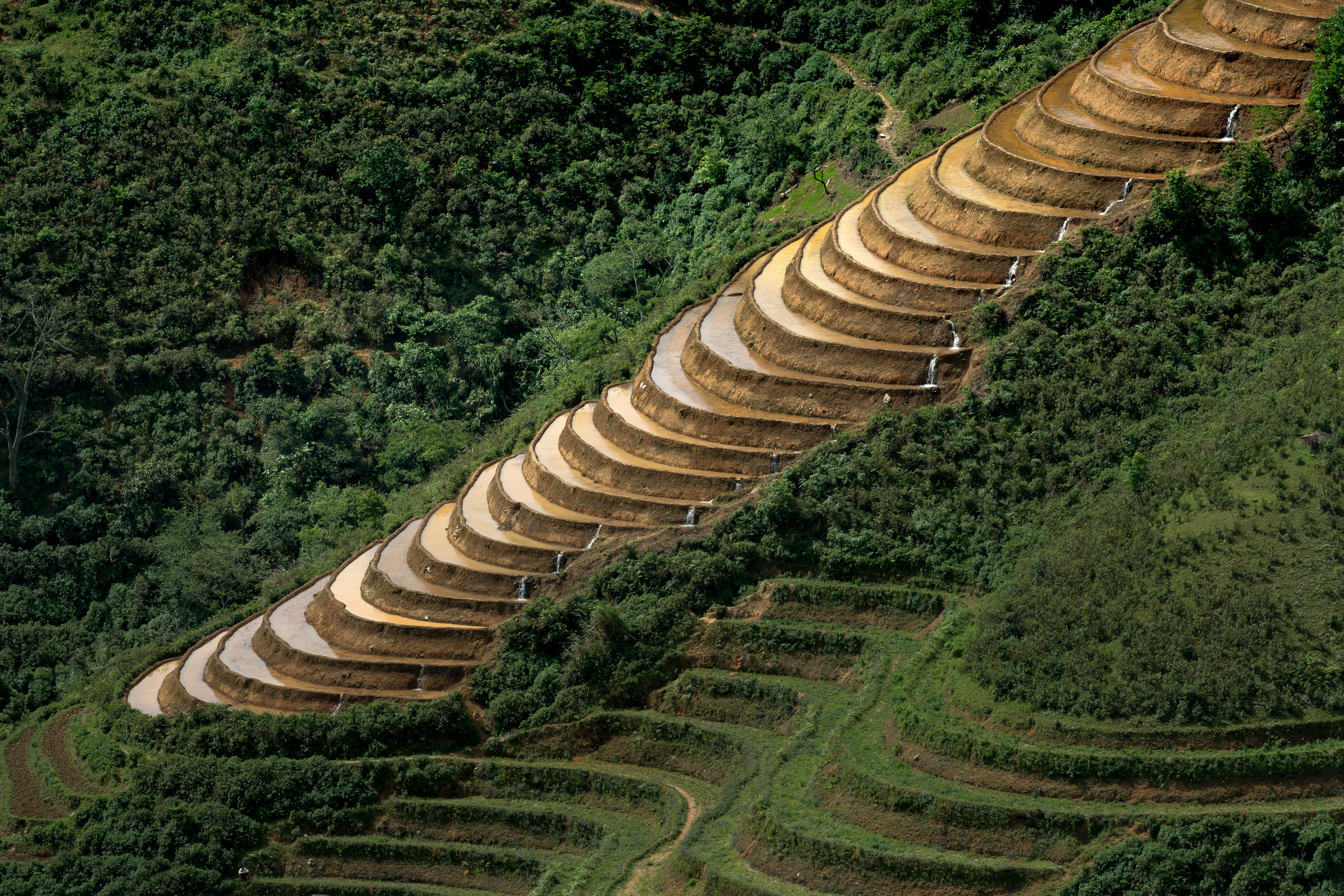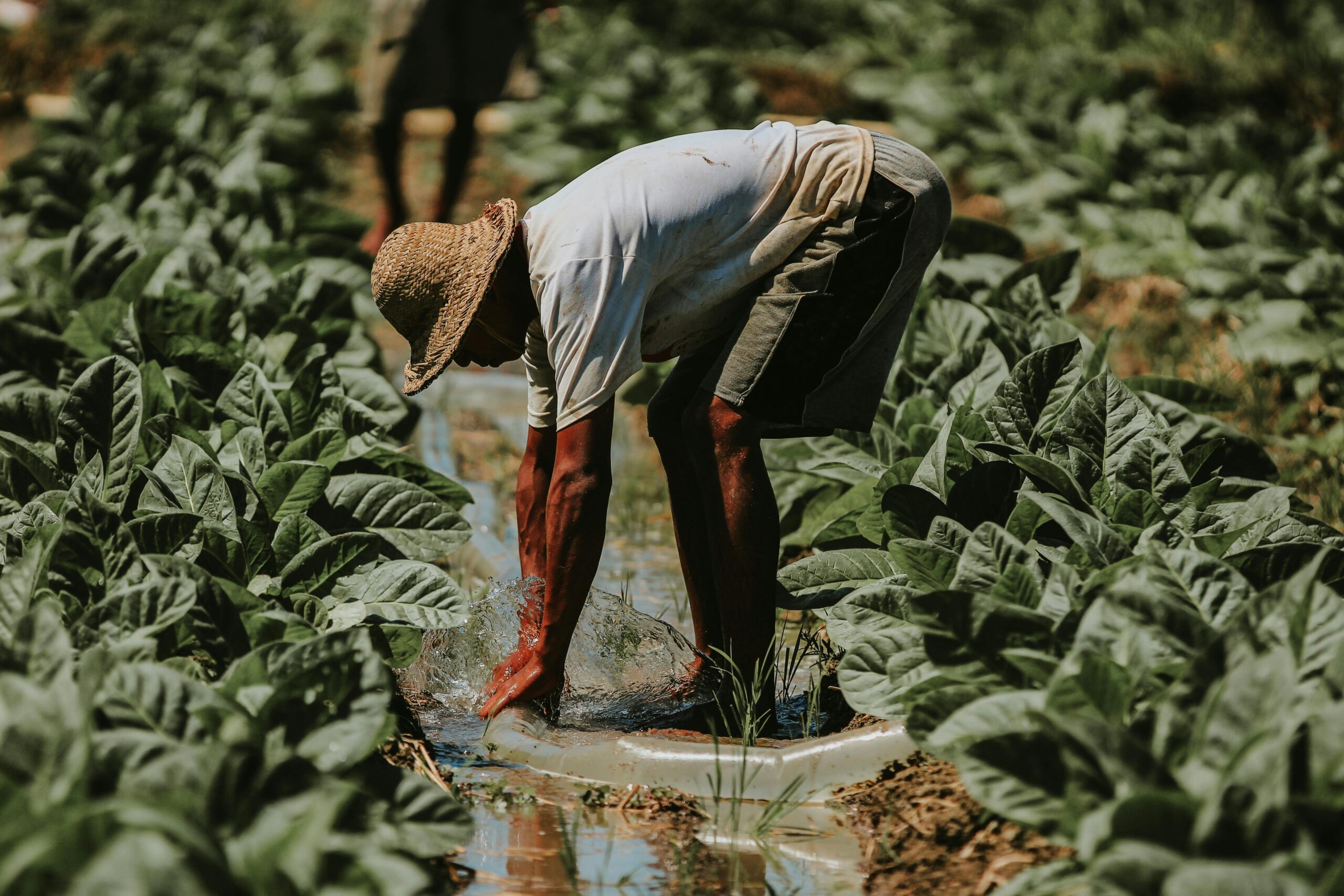
Terraced farming transforms steep mountain slopes into productive agricultural landscapes, creating a sustainable solution that has fed communities for thousands of years while preserving fragile ecosystems.

🏔️ Ancient Wisdom Meets Modern Agriculture
The art of carving horizontal steps into mountainsides represents one of humanity’s most ingenious responses to geographical challenges. Terraced farming systems have evolved across diverse cultures, from the rice paddies of Asia to the Andean highlands of South America, demonstrating remarkable adaptability and resilience. These stepped agricultural platforms do more than simply create farmable land; they represent a profound understanding of water management, soil conservation, and ecological balance.
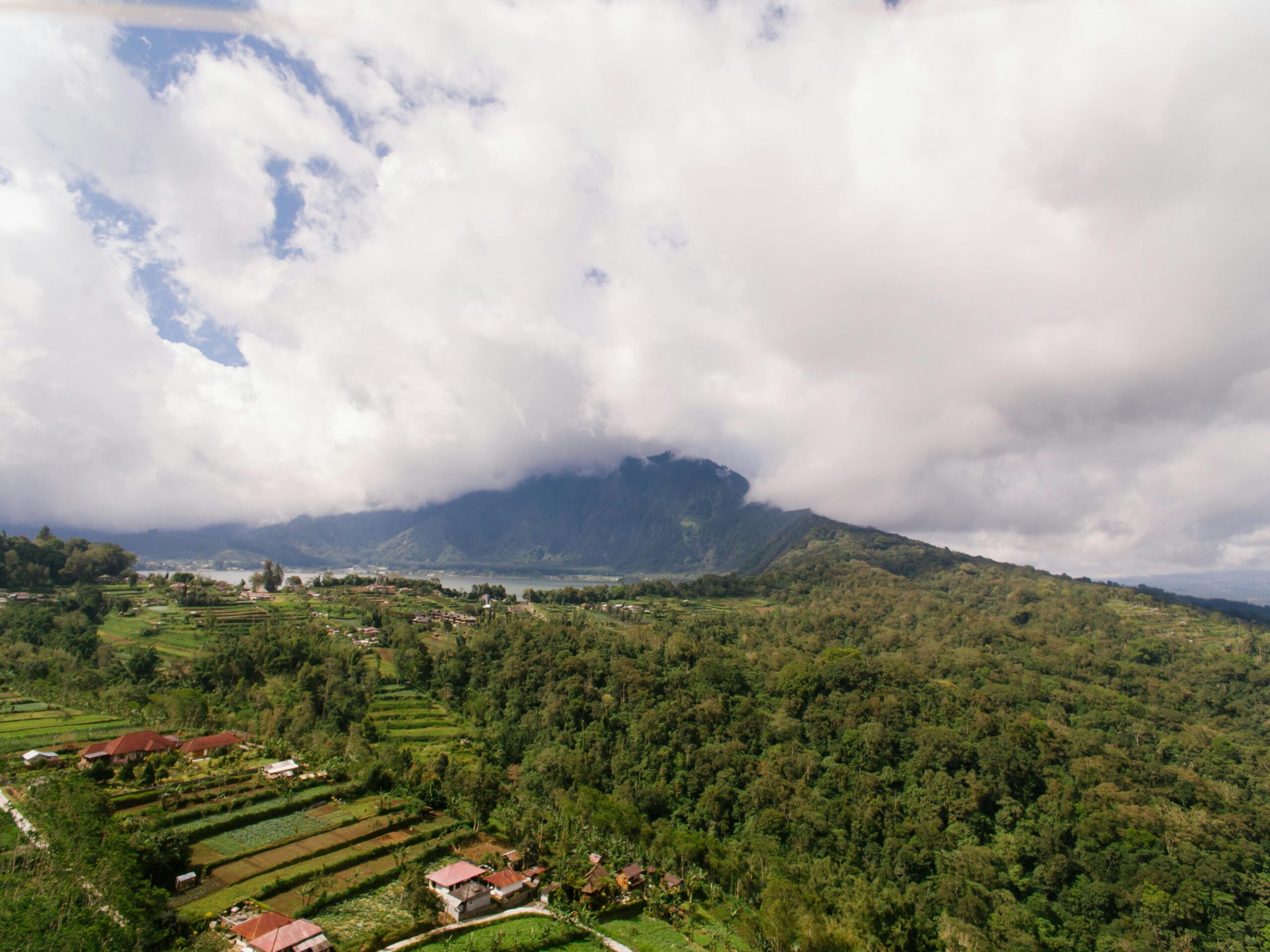
Mountain landscapes cover approximately 27% of the Earth’s land surface and support nearly 15% of the global population. As climate change intensifies and arable land becomes increasingly scarce, the potential of terraced farming systems deserves renewed attention. These structures offer solutions to contemporary agricultural challenges while maintaining cultural heritage and supporting biodiversity in ways that conventional farming cannot match.
The Engineering Marvel Behind Mountain Terraces
The construction of agricultural terraces requires sophisticated understanding of hydrology, geology, and structural engineering. Each terrace functions as a miniature watershed, carefully designed to capture rainfall, prevent erosion, and maximize growing conditions. The stepped configuration slows water flow, allowing moisture to penetrate the soil rather than rushing downhill, carrying valuable topsoil with it.
Traditional terrace builders considered multiple factors when designing these systems. The gradient of each step, the height of retaining walls, drainage channels, and the integration of irrigation networks all required precise calculation. Stone walls, often built without mortar, used interlocking techniques that provided flexibility during earthquakes while maintaining structural integrity for centuries.
Key Components of Effective Terrace Systems
- Retaining walls constructed from local materials like stone, wood, or compacted earth
- Drainage channels that prevent waterlogging and manage excess rainfall
- Irrigation networks that distribute water evenly across multiple levels
- Access paths connecting different terrace levels for maintenance and harvest
- Vegetation buffers that stabilize soil and support beneficial insects
- Composting areas integrated into the design for nutrient cycling
🌾 Maximizing Agricultural Productivity on Steep Slopes
The productivity potential of well-maintained terrace systems often surprises those unfamiliar with this agricultural approach. By creating multiple growing zones at different elevations, farmers can cultivate diverse crops suited to varying microclimates within a single mountainside. Lower terraces might support water-intensive crops like rice, while higher levels host drought-resistant varieties.
Research indicates that properly managed terraced farms can achieve yields comparable to or exceeding flatland agriculture while using significantly less water and chemical inputs. The stepped design naturally creates varied sun exposure, wind protection, and moisture levels, allowing farmers to match crops precisely to optimal growing conditions. This microclimate diversity becomes particularly valuable as climate patterns become less predictable.
Crop Selection Strategies for Terraced Systems
Strategic crop placement across terrace levels maximizes both productivity and sustainability. Tall crops like corn or fruit trees on lower terraces provide shade for heat-sensitive vegetables on upper levels. Deep-rooted plants stabilize soil structure, while nitrogen-fixing legumes naturally fertilize neighboring crops. This polyculture approach reduces pest pressures and creates resilient food systems less vulnerable to single crop failures.
Modern terraced farms increasingly integrate traditional varieties with contemporary agricultural knowledge. Heritage grains, ancient vegetable cultivars, and indigenous crop species often perform exceptionally well in terrace environments, having evolved alongside these farming methods. These varieties typically require fewer inputs while offering superior nutrition and market value as consumers seek diverse, heritage foods.
Water Management: The Lifeblood of Mountain Agriculture
Effective water management separates successful terraced farms from those that struggle with erosion and poor yields. The cascading design of terraces creates natural irrigation opportunities, with water flowing from upper levels to lower ones through carefully constructed channels. This gravity-fed system requires minimal energy input while ensuring even distribution across the entire farm.
During heavy rainfall, the stepped structure dramatically reduces water velocity, preventing the devastating erosion that plagues sloped agricultural land. Each terrace acts as a checkpoint, allowing water to infiltrate the soil gradually. Excess water moves to the next level in controlled fashion rather than gathering destructive momentum. This natural water management system recharges aquifers and maintains stream flow during dry seasons.
Innovative Irrigation Technologies for Terraced Landscapes
Contemporary terrace farmers increasingly adopt water-efficient technologies adapted to stepped terrain. Drip irrigation systems modified for terrace configurations deliver water directly to plant roots with minimal waste. Solar-powered pumps overcome elevation challenges without relying on electrical grid infrastructure. Moisture sensors at different terrace levels provide data for precision irrigation scheduling, optimizing water use while maintaining crop health.
Rainwater harvesting structures integrated into terrace design capture precipitation that would otherwise run off. Storage ponds at strategic locations provide water reserves during dry spells. Some innovative farmers install small-scale hydroelectric systems that generate power from water flowing between terrace levels, creating energy self-sufficiency while maintaining agricultural productivity.
🌱 Soil Health and Erosion Prevention
Soil conservation represents perhaps the most critical benefit of terraced farming in mountain environments. Conventional agriculture on slopes can lose topsoil at rates exceeding 100 tons per hectare annually. Properly constructed terraces reduce erosion by over 90%, preserving the precious soil resource that took millennia to develop.
The horizontal planting surfaces of terraces prevent the gravitational pull that constantly threatens sloped farmland. Rather than washing downhill with every rain, organic matter, nutrients, and beneficial microorganisms remain in place, building soil fertility over time. Many ancient terrace systems actually show increased soil depth and quality compared to when originally constructed, demonstrating the regenerative potential of this approach.
| Farming Method | Annual Soil Loss (tons/hectare) | Water Retention (%) | Biodiversity Index |
|---|---|---|---|
| Conventional Slope Farming | 80-150 | 30-45% | Low |
| Terraced Systems | 5-15 | 75-90% | High |
| Flatland Monoculture | 10-40 | 45-60% | Very Low |
Building Soil Fertility Through Organic Management
Terraced farms naturally lend themselves to organic and regenerative practices. The diversity of crops typical in these systems supports complex soil food webs. Composting organic waste from different terrace levels creates nutrient-rich amendments. Cover crops planted during off-seasons protect soil while adding organic matter. Integrated livestock systems, with animals grazing terraced pastures, complete nutrient cycles through managed manure application.
Mycorrhizal fungi and beneficial bacteria thrive in the stable, undisturbed environments that terraces provide. These microscopic allies extend plant root systems, improve nutrient uptake, and enhance drought resistance. The permanent nature of terrace infrastructure encourages long-term soil building rather than the extractive mindset that characterizes much modern agriculture.
Economic Viability in Contemporary Markets
Questions about economic sustainability often arise when discussing traditional farming methods in modern contexts. Terraced agriculture faces higher initial construction costs and labor requirements compared to mechanized flatland farming. However, comprehensive economic analysis reveals compelling advantages when environmental services, product quality, and long-term sustainability enter the equation.
Specialty crops suited to terrace environments often command premium prices. High-altitude tea, mountain coffee, heritage grains, and organic vegetables from terraced farms appeal to consumers seeking quality and sustainability. Agritourism opportunities add revenue streams, with visitors paying to experience traditional farming methods and stunning terraced landscapes. Some regions have successfully branded their terraced products, creating geographic indications that protect and promote unique mountain agriculture.
💰 Investment Considerations and Return Potential
The financial calculus of terraced farming extends beyond simple crop yields. Carbon sequestration in well-managed terrace soils creates potential revenue through carbon credit markets. Ecosystem services including watershed protection, biodiversity conservation, and landscape stabilization provide value that increasingly translates into compensation programs. Government incentives in many regions support terrace construction and maintenance, recognizing their environmental benefits.
Labor requirements, while higher than mechanized alternatives, create rural employment opportunities in regions where jobs are scarce. Young people returning to mountain communities increasingly see terraced farming as viable when combined with direct marketing, value-added processing, and digital commerce platforms. The romantic appeal of mountain farming, particularly organic terraced production, attracts new generations willing to embrace physically demanding work for lifestyle and environmental benefits.
Climate Resilience Through Terraced Agriculture
As climate change brings more extreme weather events, the resilience of terraced farming systems becomes increasingly apparent. The diversity inherent in these systems provides insurance against crop failures. When one crop struggles with unexpected weather, others compensate. The water management capabilities of terraces help communities adapt to both intensifying droughts and more severe rainfall events.
Temperature variations associated with climate change actually increase the microclimate diversity advantages of terraced landscapes. Farmers can shift crop locations vertically, moving heat-sensitive varieties higher as temperatures rise. The permanent infrastructure of terraces provides stability even as specific crops and practices evolve to meet changing conditions.
🌍 Carbon Sequestration and Climate Mitigation
Beyond adaptation, terraced agriculture contributes to climate mitigation through significant carbon sequestration. The combination of permanent vegetation, minimal soil disturbance, and continuous organic matter addition stores substantial carbon in terrace soils. Perennial crops and agroforestry systems common in terraced landscapes sequester additional carbon in woody biomass. Studies indicate well-managed terraced systems can sequester 2-5 tons of carbon per hectare annually.
The reduced need for chemical inputs in terraced polyculture systems eliminates emissions associated with synthetic fertilizer production and application. Local food production from terraced farms reduces transportation emissions. The longevity of terrace infrastructure means construction emissions are amortized over centuries rather than decades, creating favorable lifecycle carbon calculations.
Cultural Heritage and Community Identity
Terraced landscapes represent more than agricultural infrastructure; they embody cultural identity and traditional knowledge accumulated over generations. Communities that maintain terraced farming systems preserve invaluable understanding of sustainable land management, crop varieties, and ecological relationships. This knowledge becomes increasingly precious as industrial agriculture proves unsustainable.
UNESCO recognition of several terraced landscapes as World Heritage Sites acknowledges their cultural significance. These designations bring tourism revenue while creating incentives for terrace preservation. Communities take pride in maintaining landscapes that define regional identity and connect present inhabitants with ancestral traditions.
🚀 Technology Integration for Enhanced Performance
Modern technology offers exciting opportunities to enhance traditional terraced farming without compromising its fundamental principles. Drones equipped with multispectral cameras monitor crop health across multiple terrace levels, identifying problems early. GPS-guided micro-machinery adapted for terraced terrain reduces labor demands while maintaining the hand-crafted quality of mountain agriculture.
Digital platforms connect terraced farmers with consumers, chefs, and distributors seeking premium mountain products. Weather prediction models help farmers optimize planting and harvest timing. Online marketplaces showcase terraced farm products to global audiences, commanding prices that make mountain agriculture economically competitive.
Smart Agriculture Applications for Mountain Farming
Mobile applications specifically designed for smallholder mountain farmers provide valuable support. These tools offer crop management advice, pest identification, market price information, and community networking features. Weather alerts help farmers protect crops from sudden storms or frosts common in mountain environments.
Revitalizing Mountain Communities Through Agricultural Innovation
The renewed interest in terraced farming creates opportunities for rural development in mountain regions experiencing depopulation. Young entrepreneurs see potential in combining traditional methods with contemporary marketing and technology. Educational programs teaching terrace construction and management attract students seeking alternatives to conventional agriculture.
Cooperative models allow small-scale terraced farmers to achieve economies of scale in processing, marketing, and distribution. Shared infrastructure for value-added production transforms raw crops into premium products. Community-supported agriculture models connect urban consumers directly with mountain farmers, providing stable income while building food system relationships.
🌟 Unleashing Future Potential
The global agricultural community increasingly recognizes that feeding future populations sustainably requires diverse approaches adapted to local conditions. Terraced farming demonstrates that ancient wisdom combined with modern knowledge creates agricultural systems that are simultaneously productive, environmentally regenerative, and culturally meaningful. As humanity seeks solutions to interconnected challenges of food security, climate change, and rural poverty, the stepped fields climbing mountain slopes offer proven pathways forward.
Investment in terraced agriculture research, infrastructure support, and market development can unlock tremendous potential. Mountain landscapes currently underutilized or abandoned could produce nutritious food while sequestering carbon, conserving biodiversity, and supporting vibrant rural communities. The engineering principles, ecological understanding, and cultural knowledge embedded in terraced farming systems provide templates for sustainable agriculture wherever sloped land meets human needs.
Peak performance in mountain agriculture means recognizing that productivity extends beyond yield per hectare to encompass environmental services, cultural preservation, community resilience, and long-term sustainability. Terraced farming excels across these multiple dimensions, offering comprehensive solutions that transcend the limitations of industrial agricultural models. The ancient practice of carving steps into mountainsides reveals itself as remarkably modern—a technology for the future as much as the past.