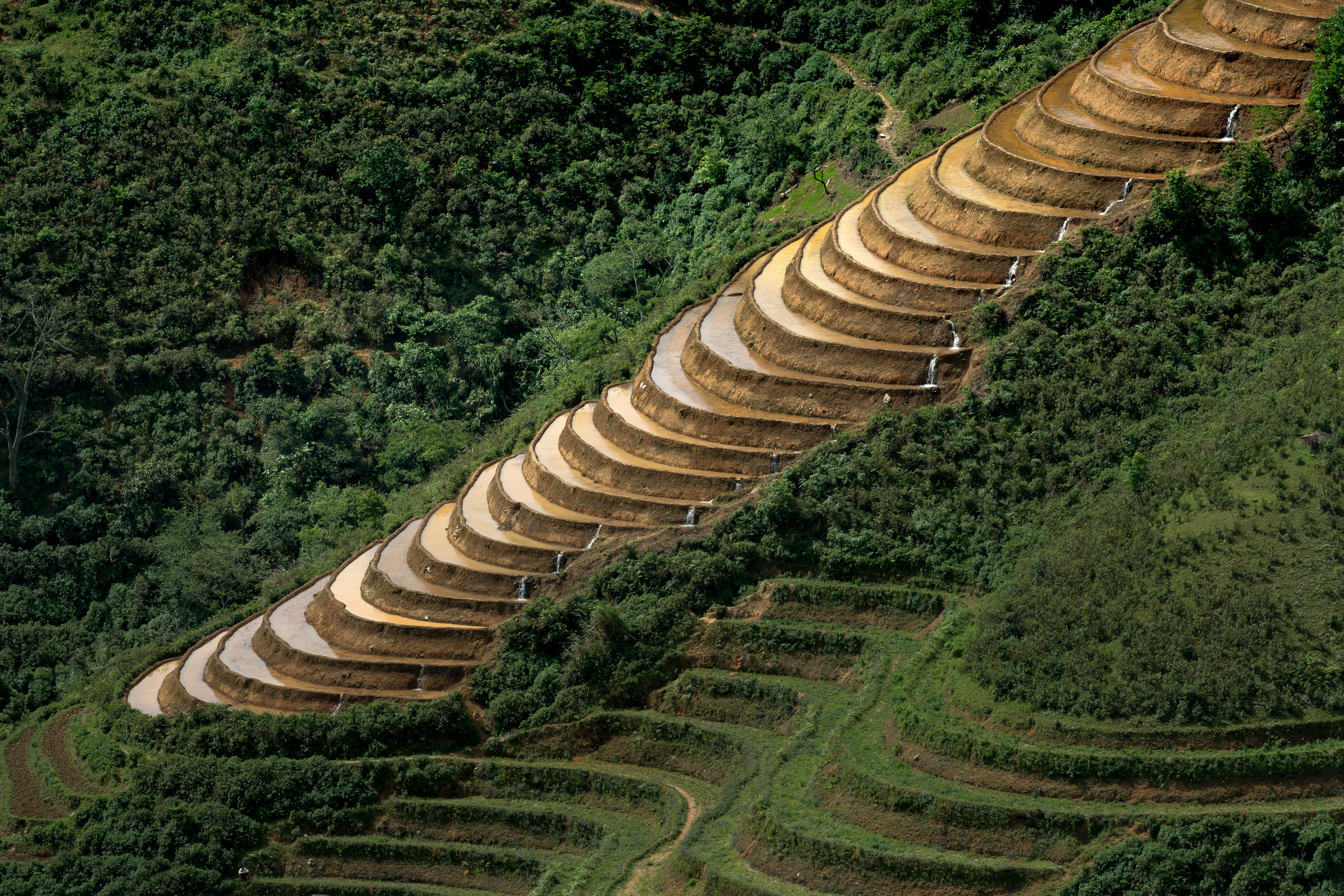
Snow-fed agriculture represents one of nature’s most elegant systems, where winter’s frozen reserves become summer’s liquid gold for crops worldwide. 🌨️

From the Himalayan foothills to the Rocky Mountain valleys, millions of farmers depend on snowmelt as their primary water source. This ancient relationship between frozen precipitation and agricultural productivity has sustained civilizations for millennia, yet modern climate variability and changing snowpack patterns demand increasingly sophisticated management approaches to maintain harvest yields.
Understanding how to effectively capture, store, and distribute snowmelt water can mean the difference between bountiful harvests and crop failure. As global agricultural demands intensify and weather patterns become less predictable, mastering water management in snow-fed systems has never been more critical for farming communities across temperate and mountainous regions.
🏔️ Understanding Snow-Fed Agricultural Systems
Snow-fed agriculture relies on accumulated winter snowpack that gradually melts during spring and summer months, providing irrigation water precisely when crops need it most. This natural irrigation system operates across approximately 40% of Earth’s agricultural regions, supporting food production for over two billion people globally.
The physics behind snowmelt is remarkably consistent yet complex. As temperatures rise above freezing, snow crystals transform into liquid water at predictable rates influenced by air temperature, solar radiation, wind speed, and humidity. This gradual release mechanism creates a natural water storage and delivery system that farmers have leveraged for generations.
Mountain snowpack functions essentially as a massive elevated reservoir, storing precipitation during cold months when crops aren’t growing and releasing it during warm months when agricultural water demand peaks. This temporal shift between precipitation and availability makes snow-fed systems uniquely valuable for agriculture in regions with dry summers.
Geographic Distribution of Snow-Fed Agriculture
Snow-dependent farming systems predominate in specific global regions where geography and climate create optimal conditions. The western United States, particularly California’s Central Valley, depends heavily on Sierra Nevada snowpack for irrigation water supporting a multi-billion dollar agricultural economy.
Central Asian countries including Kazakhstan, Kyrgyzstan, and Tajikistan utilize snowmelt from massive mountain ranges for cotton, wheat, and fruit production. Similarly, northern India and Pakistan’s breadbasket regions draw irrigation water from Himalayan snowmelt, feeding hundreds of millions of people annually.
European snow-fed agriculture thrives in Alpine regions spanning Switzerland, Austria, northern Italy, and southern Germany, where traditional farming practices have evolved alongside snowmelt patterns over centuries. South American operations in Chile and Argentina’s Andean valleys also exemplify successful snow-dependent agricultural systems.
💧 Strategic Snowmelt Water Capture Techniques
Maximizing water availability begins with effective capture strategies during peak melt periods. Traditional methods involve constructing catchment systems at strategic elevations where snowmelt naturally concentrates, using gravity to channel water toward storage facilities or distribution networks.
Modern snow farming techniques deliberately manipulate snow accumulation patterns through strategic placement of snow fences, vegetation barriers, and terrain modifications. These interventions increase snow deposition in desired locations while reducing wind-driven snow loss, effectively expanding the watershed’s water capture capacity by 15-30%.
Timing proves critical for capture efficiency. Early season melt often occurs when soil remains frozen, causing significant runoff losses. Implementing temporary retention structures that slow water movement allows more infiltration into soil profiles and aquifer recharge, preserving water for later crop use.
Infrastructure for First Capture
Diversion structures positioned at watershed outlets intercept snowmelt before it escapes the agricultural system. Simple earth berms, concrete weirs, or adjustable gates direct water into collection channels or storage ponds with minimal energy input, relying entirely on gravitational flow.
Infiltration basins constructed in permeable soil areas allow rapid percolation of captured snowmelt into underground aquifers, creating natural storage that remains available throughout the growing season. These basins require careful placement in areas with appropriate soil characteristics and sufficient depth to groundwater tables.
Pipeline networks increasingly replace open channel systems in modern operations, reducing evaporative losses and preventing contamination while enabling precise water delivery. Although initial costs exceed traditional ditches, long-term water conservation benefits typically justify the investment within 5-7 years.
🏗️ Storage Solutions for Extended Availability
Effective storage bridges the temporal gap between peak snowmelt in spring and maximum crop water demand in mid-summer. Without adequate storage capacity, much of the early season melt flows away unused, creating potential shortages during critical growth periods.
Surface reservoirs remain the most common storage approach, ranging from small farm ponds to massive regional reservoirs serving multiple agricultural districts. Proper design considers evaporation rates, seepage prevention, and capacity sufficient to meet 70-100% of seasonal irrigation requirements.
Reservoir location significantly impacts storage efficiency. Higher elevation sites naturally deliver water to fields through gravity systems, eliminating pumping costs and energy consumption. However, construction challenges and land availability often necessitate lower elevation placement despite operational disadvantages.
Underground Storage Options
Aquifer storage and recovery systems inject excess snowmelt into underground formations during high-flow periods, then extract water during summer months when surface supplies diminish. This approach eliminates evaporative losses and requires minimal land area compared to surface reservoirs.
Natural underground storage through managed aquifer recharge leverages existing geological formations without requiring wells or injection infrastructure. Spreading basins allow snowmelt to percolate naturally, raising groundwater levels that can be tapped via existing wells throughout the irrigation season.
Soil moisture banking involves applying snowmelt to fields weeks before planting, allowing deep percolation that charges the soil profile to field capacity. This stored moisture sustains early crop growth and reduces initial irrigation requirements, effectively using soil as a distributed storage medium.
📊 Calculating Water Requirements and Timing
Precise estimation of crop water needs throughout the growing season enables optimal storage capacity planning and distribution scheduling. Evapotranspiration rates, crop coefficients, and phenological stages all influence water consumption patterns that vary substantially across the season.
| Crop Type | Peak Water Use (inches/week) | Critical Period | Season Total (acre-inches) |
|---|---|---|---|
| Alfalfa | 2.0-2.5 | Late spring through summer | 42-54 |
| Corn | 1.8-2.2 | Tasseling to grain fill | 22-28 |
| Wheat | 1.2-1.6 | Heading to early grain fill | 18-24 |
| Orchard Trees | 1.5-2.0 | Fruit development | 30-40 |
| Vegetables | 1.0-1.8 | Flowering and fruiting | 16-26 |
Historical snowpack data combined with melt rate projections provides reasonable estimates of available water volumes for upcoming seasons. Weather monitoring services now offer increasingly accurate seasonal forecasts that enable proactive adjustment of planting decisions and storage management strategies.
Water budgeting tools help farmers track supply versus demand throughout the season, identifying potential deficit periods early enough to implement conservation measures. These calculations account for storage losses, conveyance efficiency, and application effectiveness to provide realistic available water estimates.
🌾 Distribution Systems for Maximum Efficiency
Converting stored snowmelt into crop-available soil moisture requires distribution systems designed for both efficiency and flexibility. Traditional surface irrigation methods including furrows and flood systems remain common but typically achieve only 50-70% application efficiency due to runoff and deep percolation losses.
Sprinkler systems improve efficiency to 70-85% through more controlled application rates and better uniformity across fields. Modern center pivot and linear move systems automate water delivery while enabling variable rate application that matches water amounts to specific field zones based on soil characteristics and topography.
Drip irrigation represents the gold standard for water conservation, achieving 85-95% efficiency by delivering water directly to crop root zones with minimal evaporative loss. Initial costs exceed other methods substantially, but water savings in snow-dependent regions with limited supplies often justify the investment for high-value crops.
Scheduling for Optimal Application
Irrigation timing dramatically impacts both water use efficiency and crop productivity. Applying water when soil moisture drops to specific thresholds maintains optimal growing conditions while avoiding waste from over-irrigation that drives water below the root zone.
Soil moisture sensors provide real-time data on water content at multiple depths, enabling precision scheduling based on actual conditions rather than calendar dates or rough estimates. These tools prevent both water stress and over-application, maximizing harvest quality while conserving limited snowmelt supplies.
Evapotranspiration-based scheduling uses weather data and crop coefficients to calculate daily water use, then prescribes irrigation amounts to replace losses. This approach works effectively across diverse crop types and field conditions, though it requires consistent weather monitoring and periodic soil moisture verification.
🌡️ Adapting to Variable Snowpack Conditions
Climate variability increasingly challenges traditional snow-fed agricultural practices as snowpack levels fluctuate more dramatically between years. Some seasons deliver abundant snow producing excess runoff, while others generate barely adequate melt to sustain crops through summer.
Flexible management strategies accommodate this variability through contingency planning that addresses both abundance and scarcity scenarios. During high snowpack years, maximize storage capacity and consider lower-value crops that utilize excess water, building reserves for inevitable deficit years.
Drought response plans established before water shortages emerge enable rapid implementation of conservation measures when snowpack surveys indicate below-normal accumulations. These plans prioritize water allocation across crops, identify fields for potential fallowing, and schedule reduced irrigation applications that maintain survival while accepting some yield reduction.
Diversification as Risk Management
Crop diversification reduces vulnerability to water supply variability by including both high-water demanding crops and drought-tolerant alternatives within the farm portfolio. When snowpack appears limited, shift acreage toward lower water use crops that still generate acceptable economic returns.
Temporal diversification through staggered planting dates spreads peak water demand across longer periods, reducing maximum daily draw from storage and improving system capacity utilization. This approach proves particularly valuable in regions where mid-summer water availability becomes critically limited.
Economic diversification beyond purely agricultural income sources provides resilience when water shortages force reduced planting. Agritourism, renewable energy generation, conservation programs, and other revenue streams help maintain farm viability during years when snowmelt proves insufficient for full production.
📱 Technology Integration for Enhanced Management
Modern technology transforms snow-fed agriculture water management through improved monitoring, forecasting, and control capabilities. Remote sensing platforms including satellites and drones assess snowpack conditions across entire watersheds, providing accurate volume estimates that inform seasonal planning.
Weather forecasting services now deliver increasingly reliable long-range predictions of snowmelt timing and volumes, enabling proactive adjustments to storage operations and planting schedules. Integration of these forecasts with farm management software creates decision support systems that optimize water use across complex agricultural operations.
Automated control systems adjust irrigation delivery in response to real-time soil moisture, weather conditions, and crop stage without requiring constant manual oversight. These systems typically reduce water use by 15-25% compared to conventional scheduling while maintaining or improving yields through precision application.
Data-Driven Decision Making
Historical data analysis reveals patterns in snowpack-crop yield relationships that inform current season management decisions. Machine learning algorithms identify optimal irrigation strategies based on decades of weather, water availability, and production records that exceed human pattern recognition capabilities.
Collaborative data platforms allow farmers within shared watersheds to coordinate water use, reducing conflicts and improving overall system efficiency. These platforms track real-time storage levels, distribution schedules, and remaining allocations, creating transparency that facilitates equitable water sharing.
Mobile applications bring sophisticated water management tools to field level, enabling quick adjustments and informed decisions without returning to office computers. Push notifications alert farmers to changing conditions or required actions, ensuring timely responses that prevent water waste or crop stress.
🌱 Soil Management for Water Conservation
Soil health directly influences how effectively agricultural systems utilize available snowmelt water. Improved soil structure enhances infiltration rates, increases water holding capacity, and reduces runoff, essentially expanding the functional storage available to crops.
Organic matter additions through compost applications, cover cropping, and reduced tillage improve soil water retention by 1-2 inches per foot of soil depth. This seemingly modest improvement translates to 3,000-6,000 gallons of additional plant-available water per acre, often eliminating 1-2 irrigation events per season.
Soil compaction from equipment traffic creates impermeable layers that prevent root development and reduce water infiltration. Controlled traffic patterns, reduced tillage intensity, and strategic deep ripping break compaction layers, allowing roots to access deeper soil moisture reserves and captured snowmelt to penetrate further into profiles.
Mulching and Surface Management
Surface mulches including crop residues, wood chips, or plastic films reduce evaporative losses from soil surfaces by 30-50%, preserving snowmelt-derived moisture for crop use rather than atmospheric return. Organic mulches provide the additional benefit of gradually improving soil structure as they decompose.
Conservation tillage systems that maintain residue cover reduce early season evaporation when snowmelt application exceeds immediate crop uptake. These systems also improve infiltration of spring melt events, allowing more water to enter rather than run off frozen or saturated soil surfaces.
Strategic windbreak establishment reduces wind speed across fields, decreasing evapotranspiration rates by 15-30% in protected zones. Properly designed windbreaks create microclimates that extend effective water availability without requiring additional snowmelt supplies.
🤝 Community Collaboration and Water Sharing
Snow-fed agricultural regions typically involve multiple users drawing from shared water sources, making cooperation essential for sustainable management. Water user associations coordinate distribution schedules, maintain shared infrastructure, and resolve conflicts through established governance structures.
Rotational delivery systems allocate water to different users on scheduled cycles, ensuring equitable access while enabling efficient main system operation. These schedules typically provide each farmer with concentrated flow during their turn rather than continuous small flows that create application challenges.
Water markets and temporary transfer agreements allow flexibility when individual farmers face excess or shortage relative to others in the system. These arrangements enable water movement from lower-value to higher-value uses while compensating those who reduce consumption, improving overall economic efficiency.
🔬 Monitoring and Adaptive Management
Effective water management requires continuous monitoring of both supply conditions and crop responses, enabling adaptive adjustments throughout the growing season. Regular snowpack surveys during winter provide updated estimates of expected melt volumes, while growing season monitoring tracks actual vs. predicted water availability.
Crop monitoring through visual inspection, remote sensing, or direct plant measurements identifies water stress symptoms before significant yield losses occur. Early detection enables corrective irrigation applications or, during severe shortages, strategic decisions about which fields receive limited supplies.
Performance evaluation after each season identifies successful strategies and areas needing improvement. Yield data, water use records, and economic analyses inform refinements to management approaches that incrementally improve efficiency and productivity across multiple years.
🌍 Building Resilience for Future Conditions
Long-term sustainability of snow-fed agriculture requires preparing for climate change impacts on snowpack characteristics. Earlier melt timing, reduced snow-to-rain ratios, and increased variability all challenge traditional management approaches developed under more stable historical conditions.
Infrastructure investments that increase storage capacity provide buffering against timing shifts and variability increases. Expanding reservoirs, developing supplemental groundwater sources, and improving distribution efficiency all enhance system resilience to changing snowmelt patterns.
Research participation and knowledge sharing advance the entire agricultural community’s adaptive capacity. Engaging with university extension services, participating in demonstration projects, and sharing experiences with neighboring farmers accelerates learning and innovation that benefits all stakeholders in snow-dependent agricultural systems.
The relationship between mountain snowpack and valley harvests has sustained agricultural communities for millennia, yet maintaining this relationship requires evolving management approaches that match contemporary challenges. Through strategic water capture, efficient storage, precision distribution, and adaptive management, farmers can continue maximizing harvests from nature’s frozen reserves even as conditions change. Success demands integrating traditional knowledge with modern technology, individual initiative with community cooperation, and short-term production goals with long-term sustainability principles. Those who master these elements position their operations to thrive across variable conditions while stewarding precious snowmelt resources for future generations who will depend on the same mountains for their agricultural prosperity. 🌾💧