Mountain farming presents unique challenges, but understanding solar orientation can transform your agricultural productivity and unlock the full potential of challenging terrain.

☀️ Understanding Solar Dynamics in Mountain Agriculture
Mountain farming operates under distinctly different conditions compared to flatland agriculture. The interplay between elevation, slope angle, and sun exposure creates microclimates that can dramatically affect crop performance. Solar orientation—the direction a slope faces relative to the sun’s path—becomes the determining factor between thriving crops and disappointing harvests.
In mountainous regions, solar radiation intensity increases approximately 10-12% for every 1,000 meters of elevation gain. This phenomenon occurs because there’s less atmosphere to filter sunlight at higher altitudes. However, this advantage only materializes when slopes are properly oriented to capture maximum solar energy throughout growing seasons.
North-facing slopes in the Northern Hemisphere receive significantly less direct sunlight compared to south-facing slopes, creating temperature differences of up to 10-15°C during peak growing seasons. These variations influence soil moisture retention, frost occurrence patterns, and ultimately determine which crops will flourish in specific locations.
The Science Behind Slope Aspect and Crop Performance
Slope aspect refers to the compass direction a hillside faces, and it profoundly influences several critical agricultural factors. South-facing slopes in the Northern Hemisphere receive maximum solar radiation, experiencing earlier snowmelt, warmer soil temperatures, and extended growing seasons. Conversely, north-facing slopes remain cooler and moister throughout the year.
Research conducted in Alpine regions demonstrates that south-facing slopes can achieve growing seasons 2-4 weeks longer than their north-facing counterparts. This extension proves invaluable for crops requiring accumulated heat units to reach maturity, including tomatoes, peppers, and many fruit-bearing trees.
🌄 Strategic Crop Selection Based on Solar Exposure
Matching crops to appropriate solar orientations maximizes productivity while minimizing resource inputs. Understanding which plants thrive under specific light conditions allows farmers to work with natural advantages rather than fighting against them.
Optimal Crops for South-Facing Slopes
South-facing mountain slopes offer premium real estate for heat-loving and sun-demanding crops. These orientations receive maximum direct sunlight, creating warmer microclimates ideal for:
- Grapevines and wine production—many renowned wine regions exploit south-facing mountain slopes
- Stone fruits including peaches, apricots, and cherries that require substantial heat accumulation
- Mediterranean herbs such as rosemary, thyme, lavender, and oregano
- Tomatoes, peppers, eggplants, and other heat-loving vegetables
- Warm-season grains and legumes that benefit from extended growing periods
The enhanced solar exposure on south-facing slopes also reduces disease pressure from fungal pathogens that thrive in damp, shaded conditions. Better air circulation and faster morning dew evaporation create healthier growing environments.
Capitalizing on North-Facing Slope Characteristics
While north-facing slopes receive less direct sunlight, they offer distinct advantages for specific agricultural applications. The cooler, moister conditions support crops that struggle with excessive heat or require consistent moisture levels:
- Leafy greens including lettuce, spinach, and kale that bolt prematurely in hot conditions
- Root vegetables such as potatoes, carrots, and beets that prefer cooler soil temperatures
- Berries including raspberries, blackberries, and certain strawberry varieties
- Cool-season crops like peas, broad beans, and brassicas
- Shade-tolerant medicinal herbs and forest crops
North-facing slopes also excel for extending harvest seasons of cool-weather crops into warmer months, providing market advantages when flatland production declines.
🗺️ Mapping and Analyzing Your Mountain Farm’s Solar Potential
Precision agriculture techniques now make detailed solar analysis accessible to mountain farmers. Understanding your land’s solar characteristics enables informed decision-making about crop placement, infrastructure development, and resource allocation.
Practical Methods for Solar Assessment
Several approaches help farmers evaluate solar orientation effects across their properties. Traditional compass-based methods provide baseline information, while modern technology offers unprecedented detail.
Solar pathfinder tools and smartphone applications can calculate sun exposure hours for specific locations throughout the year. These instruments account for surrounding topography, revealing how adjacent mountains or ridges create shade patterns that change seasonally.
Digital elevation models combined with Geographic Information Systems (GIS) software generate comprehensive solar radiation maps. These analyses consider slope angle, aspect, latitude, and seasonal sun path variations to predict annual solar energy receipt across entire properties.
Creating Microclimatic Zones for Diversified Production
Mountain farms naturally contain multiple microclimatic zones based on solar orientation, elevation, and topographic features. Strategic mapping identifies these zones, allowing farmers to establish diversified production systems that maximize overall farm productivity.
A single mountain property might support wine grapes on warm south-facing slopes, salad greens on cooler north-facing terraces, and high-value medicinal herbs in partially shaded transition zones. This diversification spreads risk while optimizing each area’s natural advantages.
🌱 Practical Implementation Strategies for Solar Optimization
Knowledge becomes valuable only when translated into practical action. Implementing solar orientation principles requires thoughtful planning and sometimes creative problem-solving to overcome mountain farming challenges.
Terracing and Land Shaping Techniques
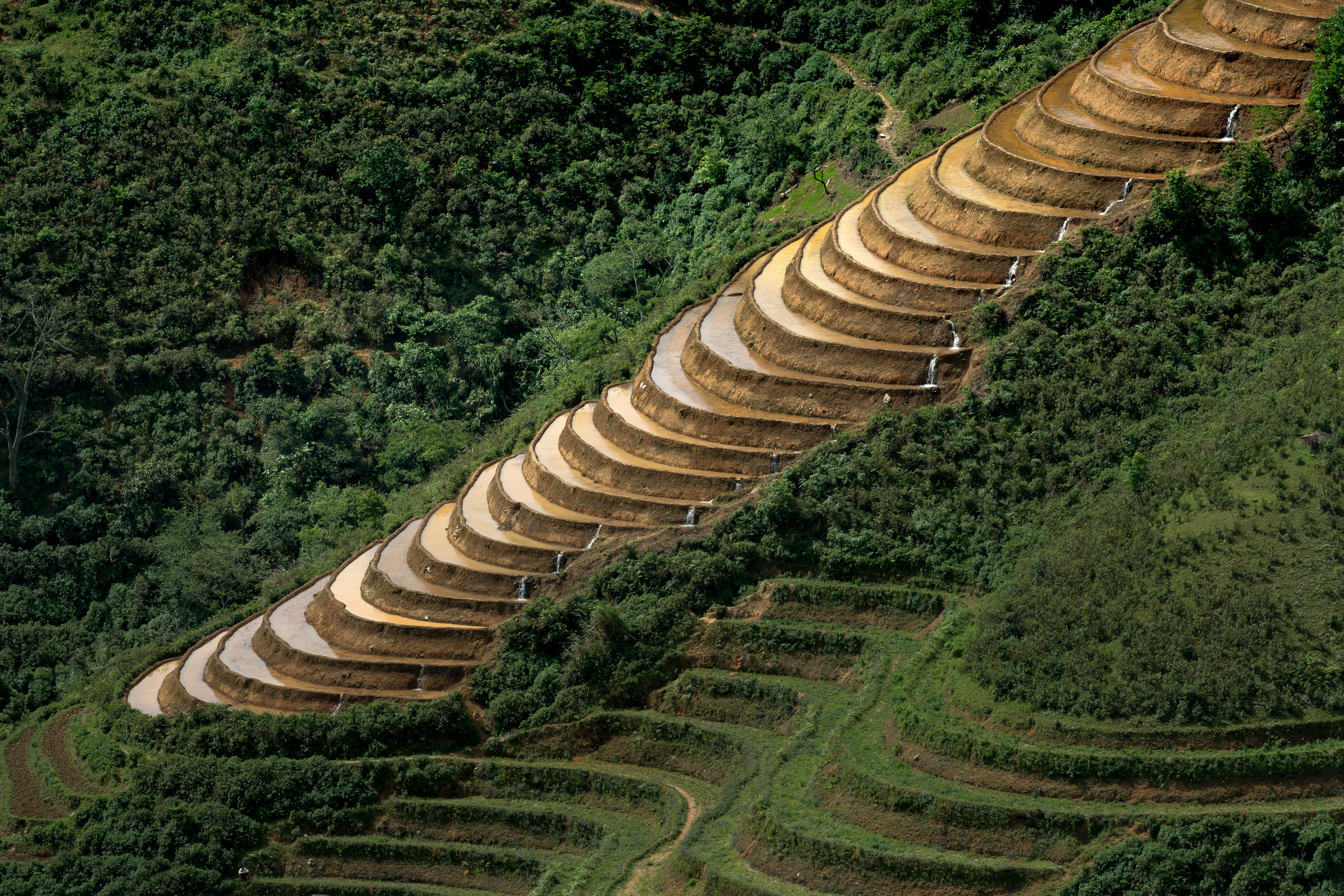
Terracing transforms steep slopes into productive agricultural land while optimizing solar exposure. Properly designed terraces can adjust effective slope angles, maximizing solar interception while controlling erosion and improving water management.
Ancient agricultural civilizations mastered terracing techniques that remain relevant today. Incan agricultural terraces in Peru and rice terraces throughout Asia demonstrate how thoughtful land shaping creates microclimates that significantly extend viable growing areas.
Modern terracing incorporates contemporary understanding of solar geometry. Terrace wall heights, widths, and orientations can be calculated to maximize growing season warmth while providing necessary structural stability and water management.
Strategic Windbreak and Shade Structure Placement
While maximizing solar exposure drives many decisions, strategic shading proves valuable in certain circumstances. Windbreaks, shade structures, and carefully positioned trees can moderate extreme conditions on highly exposed slopes.
South-facing slopes in high-altitude regions sometimes receive excessive solar radiation, causing crop stress during peak summer months. Partial shading through strategically placed deciduous trees or constructed shade structures moderates temperatures while still allowing substantial light penetration.
💧 Water Management in Relation to Solar Orientation
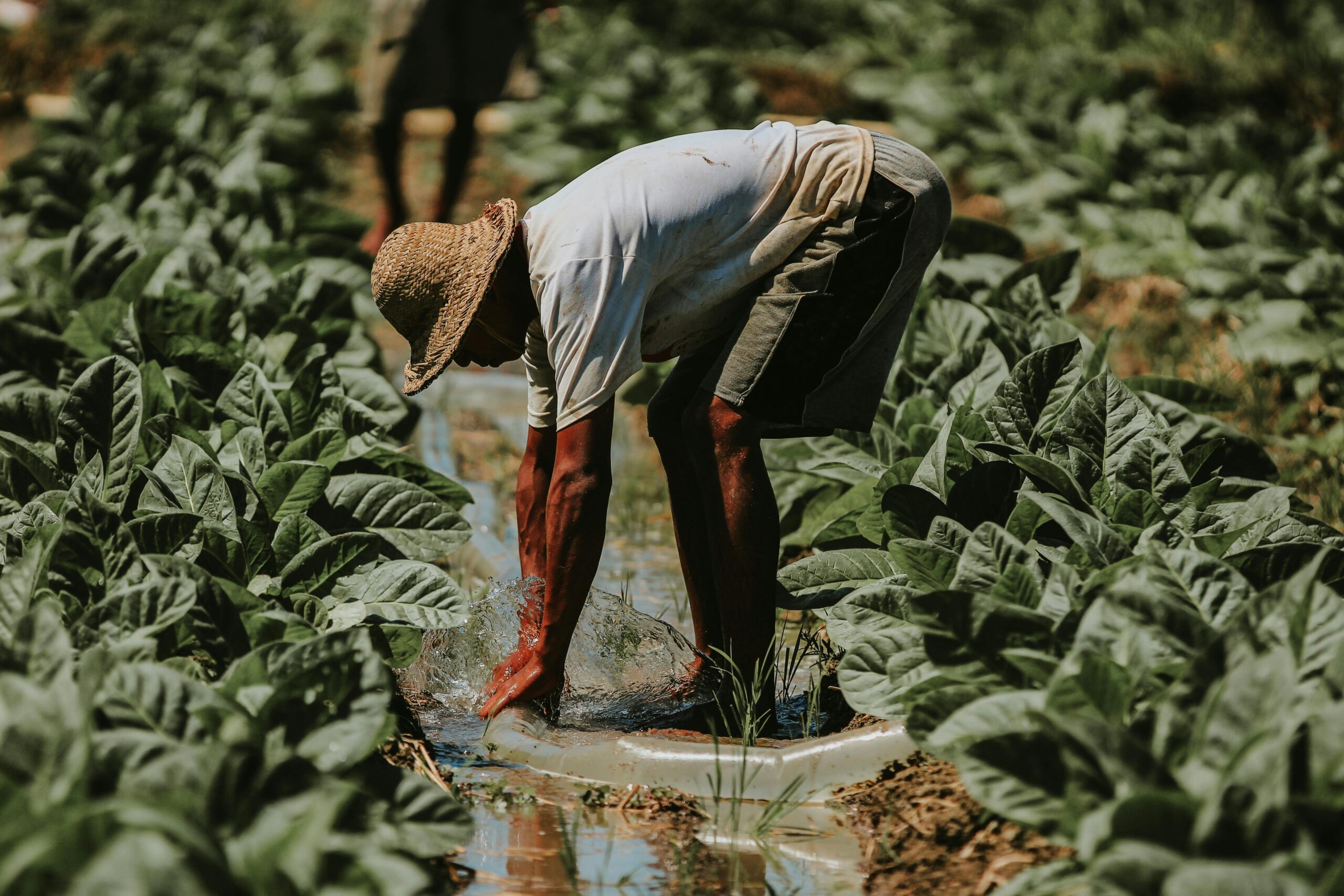
Solar orientation dramatically influences water requirements and irrigation system design. South-facing slopes experience higher evapotranspiration rates, requiring more frequent irrigation compared to north-facing areas with similar soil types and crop selections.
Soil moisture monitoring becomes essential when managing crops across varied solar exposures. Technologies ranging from simple tensiometers to sophisticated soil moisture sensor networks help farmers optimize irrigation scheduling for different microclimatic zones.
Capturing and Distributing Water Resources
Mountain topography creates opportunities for gravity-fed irrigation systems that reduce energy requirements. Positioning water storage at strategic elevations allows distribution to various farm areas while accounting for different water demands based on solar exposure.
North-facing slopes often feature springs and seeps where groundwater emerges naturally. Capturing these water sources provides irrigation for drier south-facing production areas, creating integrated water management systems that leverage natural hydrological patterns.
🌡️ Extending Growing Seasons Through Solar Intelligence
Understanding solar dynamics enables season extension techniques that increase annual productivity. Strategic use of protected cultivation, thermal mass, and microclimate manipulation can add weeks or even months to mountain growing seasons.
Cold Frame and Greenhouse Positioning
Protected cultivation structures must be precisely oriented to capture maximum winter sunlight. In Northern Hemisphere locations, greenhouses with south-facing glazing and insulated north walls optimize solar gain while minimizing heat loss.
Even simple cold frames positioned on south-facing slopes can maintain growing conditions 4-6 weeks longer in autumn and begin production 2-3 weeks earlier in spring compared to unsheltered locations. This extension proves especially valuable for high-value crops sold at premium prices during shoulder seasons.
Utilizing Thermal Mass for Temperature Moderation
Stone walls, water barrels, and other thermal mass elements absorb solar heat during daylight hours and release it gradually overnight. On south-facing slopes, strategic thermal mass placement near sensitive crops can prevent frost damage and moderate temperature extremes.
Traditional mountain agriculture frequently incorporated stone terraces and walls that functioned as passive solar collectors and heat storage. Modern farmers rediscovering these techniques find them remarkably effective for creating stable microclimates around high-value perennial crops.
📊 Monitoring and Adjusting Your Solar Strategy
Successful mountain farming requires ongoing observation and adjustment. Weather patterns, climate shifts, and crop performance data inform continuous improvements to solar orientation strategies.
| Slope Aspect | Growing Season Length | Frost-Free Days | Irrigation Requirements |
|---|---|---|---|
| South-facing | 180-210 days | 150-180 days | High (frequent) |
| East/West-facing | 160-185 days | 130-160 days | Moderate |
| North-facing | 140-165 days | 110-140 days | Low (infrequent) |
Temperature monitoring at multiple elevations and aspects reveals actual microclimate variations across your property. Inexpensive data loggers provide season-long temperature records that validate assumptions and reveal unexpected patterns.
Economic Considerations and Return on Investment
Optimizing solar orientation doesn’t always require massive infrastructure investments. Many improvements involve intelligent crop selection and placement rather than expensive land modifications.
High-value crops positioned in optimal solar zones can generate substantial income increases. Premium wine grapes, specialty herbs, or certified organic vegetables sold through direct markets often justify modest terrace construction or irrigation system investments.
🌍 Sustainable Practices and Long-Term Soil Health
Solar optimization strategies must align with sustainable agriculture principles to ensure long-term productivity. South-facing slopes, while advantageous for crop growth, face increased erosion risks and organic matter decomposition rates that require careful management.
Cover cropping proves essential on exposed slopes, protecting soil during dormant seasons while building organic matter. Species selection should match solar exposure characteristics—heat-tolerant legumes and grasses for south-facing areas, cool-season clovers and rye for north-facing slopes.
Composting and organic matter management require adjusted approaches based on solar orientation. South-facing slopes may need higher organic matter inputs to compensate for faster decomposition rates, while north-facing areas often maintain soil carbon more effectively with lower input requirements.
🚜 Integrating Technology with Traditional Knowledge
Mountain farming communities possess generations of accumulated wisdom about solar orientation effects. Combining this traditional knowledge with modern precision agriculture tools creates powerful synergies.
Local farmers often know specific microclimates, frost pockets, and productive zones through decades of observation. Validating this experiential knowledge with soil sensors, weather stations, and GIS mapping creates comprehensive understanding that drives optimal decision-making.
Participatory mapping projects involving community members can document traditional knowledge about solar exposure patterns, creating valuable resources for new farmers entering mountain agriculture.
🌟 Transforming Challenges Into Competitive Advantages
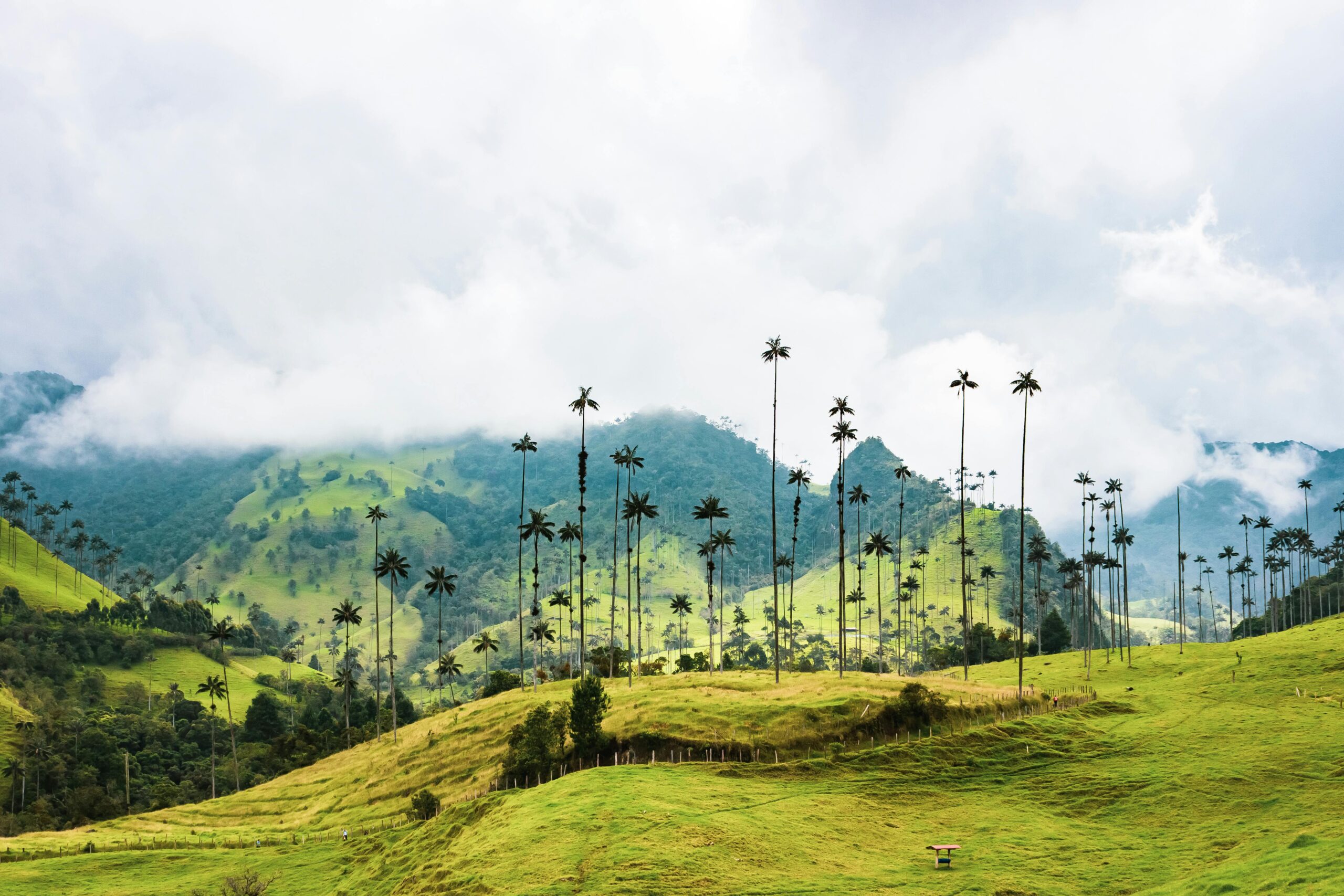
Mountain farming’s solar orientation complexities, initially appearing as obstacles, ultimately provide opportunities for differentiation and premium production. Farms leveraging microclimatic diversity produce unique products unavailable from flatland operations.
Terroir—the complete natural environment affecting crop characteristics—becomes a marketing advantage for mountain farms. Wine, cheese, herbs, and specialty crops from specific solar-oriented mountain locations command premium prices based on distinctive flavor profiles and quality attributes.
Climate change increasingly stresses traditional agricultural regions with excessive heat and drought. Mountain farms with diverse solar orientations possess inherent resilience, maintaining productive capacity across various microclimates as conditions shift.
The future of mountain agriculture lies in intelligent solar orientation management combined with sustainable practices and market-focused production strategies. Farmers who master these principles transform challenging terrain into productive, profitable, and environmentally sound agricultural enterprises that thrive for generations.
Success in mountain farming ultimately depends on working with natural forces rather than against them. Solar orientation represents one of nature’s most powerful agricultural tools—freely available, completely renewable, and remarkably effective when properly harnessed. By understanding and applying these principles, mountain farmers unlock their land’s full productive potential while building resilient, sustainable operations adapted to unique topographic conditions.